‘I’ve been in some top teams in my life, but Blythe House Hospice is the best team I’ve ever been on.’
For Barry Gordine, football has been a lifelong passion. From his early days growing up in Bethnal Green to playing professional football for Sheffield United, Oldham Athletic, Southend and Brentford, and later coaching young players, being part of a team has always been central to his life.
Now living in Buxton, Barry continues to be involved in football and the local community – receiving a special award in recognition of his contribution from Buxton Juniors FC in June 2026.
Following his diagnosis with motor neurone disease (MND), Barry accesses care and support from Blythe House Hospice.
Barry said: ‘I’ve always loved football. I’ve always loved being part of a team and helping people. When I finished playing, I didn’t want to walk away from football, so I went into coaching and working with young people. That’s something I’ve really enjoyed.’
Barry’s determination and positive attitude have been constants throughout his life. As a young goalkeeper, he was told that he was too small to make it in professional football. Rather than accepting that, he used it as motivation: ‘I’ve got a level of being stubborn! People said to me that I was too small to be a goalkeeper, that I was never going to make it. My dad said to me: “Prove them wrong!” And I did.
‘I’ve always believed that if you can’t take something on from the front, move round to the side and see if you can tackle it a different way. You’ve got to believe in yourself and believe that you can be the greatest.
‘I’ve always liked what Cassius Clay said – work to make sure you are the greatest. Do a bit extra. Don’t give up. Dad said to me: “If goals go in, don’t blame yourself; learn from it and move on.”’
Away from football, Barry met his wife, Ingrid, whilst she was working as a nurse at Boundary Park Hospital, now Royal Oldham Hospital. Their first meeting was a chance encounter as they were getting off a bus. They went on to marry and were together for more than 50 years.
In 2022, Barry’s sister died. Around the same time, he began to notice that his muscles were becoming weaker when he was training. At first, he put the changes down to stress. But when the symptoms continued, he visited his doctor in October 2024 and was referred to hospital for further tests. He was subsequently diagnosed with MND.
Barry was referred to Blythe House in 2025, and the hospice team quickly became an important part of his support network.
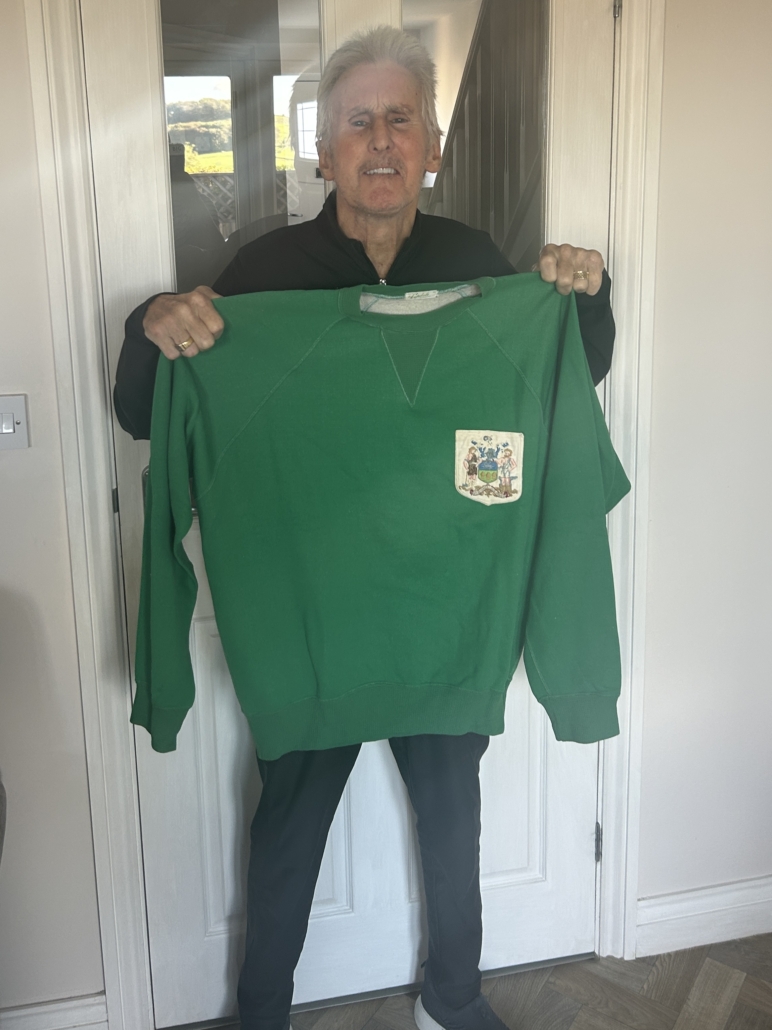
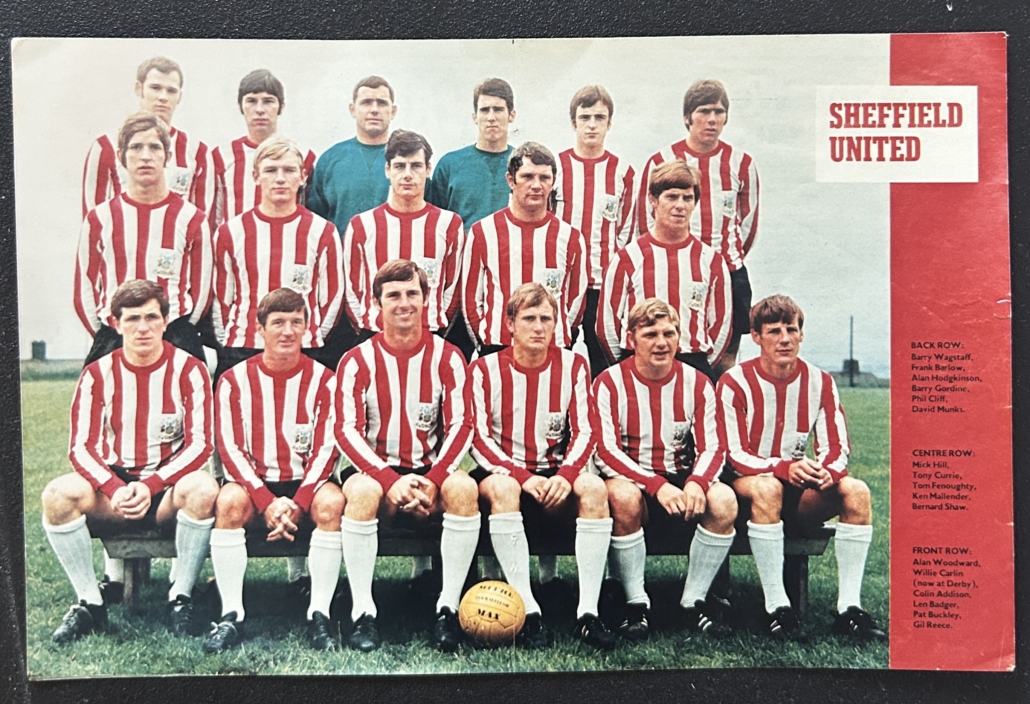
Barry, top row, fourth from left, with his Sheffield United teammates
His daughter, Louise, says the support has been invaluable: ‘Paula [Hospice at Home Nurse Manager] and the Roaming Car team, visit Dad at home. They have been the ground force for Dad’s support; they’ve been a godsend. Visiting him at home on a weekly basis including weekends, to check he’s OK; not just giving him his medication but their time and care too.
‘The Roaming Car team always goes that extra mile. They’ve been there for Dad, but they’ve also been there for us as a family. It makes such a difference knowing that there’s somebody there who understands what Dad is going through and can help us when we need it.
Barry said: ‘Blythe House staff have been brilliant. They are so caring and kind, looking after me but my family too. I’ve been in some top teams in my life, but Blythe House is the best team I’ve ever been on.’
The hospice’s physical therapy team, Miriam [Occupational Therapist], Angela [Physiotherapist] and Stuart [Therapy Assistant] have supported Barry at the hospice, helping him to stay active and independent.
More recently the team has visited Barry at home. He explained: ‘Miriam and Angela have come into my home and helped me work out how I can keep doing things for myself. They’ve introduced different aids to help me get around and make things easier. They don’t just tell you what you should do. They work with you. They look at what you want to keep doing and then think about how they can help you do it.’
For Barry, one of the most important parts of his connection with Blythe House has been the opportunity to spend time with other people at the hospice. He particularly enjoys the Thursday afternoon peer support group, where people living with different life-limiting illnesses come together, share their experiences and support one another.
Barry says: ‘The Thursday afternoon group is brilliant. We’re a good team. We’re all in it together. We’ve all got different challenges, but we support each other. You can have a bad day, but there’s always somebody there.’
Louise has also seen the impact Barry has on the people around him: ‘Dad is an inspiration to other people. He can lift their spirits if they’re having a bad day. That’s just Dad. He’s always been like that.
‘He’s fiercely independent and he wants to keep doing things for himself. Blythe House understands that about him. They don’t take that away from him – they help him to keep that independence.’
That determination is something Barry has carried with him throughout his life, from the football pitch to his work as a coach and now as he lives with MND: ‘I’ve always said that you’ve got to keep going. Life throws things at you, and you’ve got to find a way through them.
‘You do a bit extra, you don’t give up, and if something doesn’t work, you learn from it. That’s what I’ve always tried to do.
‘And now I’m part of another team. Blythe House is my team, and they’re a very good team to be part of.’


