Remember someone special this June as part of our Sunflower Memories month.
Throughout June, you can dedicate a sunflower in memory of someone special, and make a donation to support local hospice care and services.
For a suggested minimum donation of £10, a sunflower plaque will be dedicated to your loved one in the hospice garden, and you’ll be warmly invited to attend a special sunflowers coffee morning on Friday 30th June 2023 to look at the sunflower display. You’ll then be able to ‘pick’ your loved one’s sunflower and take it home to ‘plant’ in your own home or garden.
All the money raised during the month-long commemorations will go towards providing free palliative and end of life care to local patients.
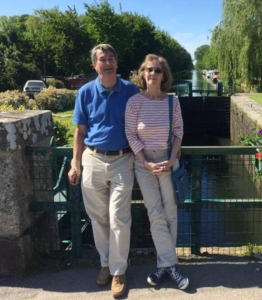 This Sunflower Memories Month, Martin is planting a sunflower in memory of his beloved wife of almost three decades, Diana, who was diagnosed with glioblastoma, a fast-growing and aggressive brain tumour, in July 2022.
Diana, whose long and successful career before retirement had been as a speech and language therapist at the Royal Hallamshire Hospital in Sheffield, started to contract severe and very painful headaches. As an incredibly talented artist, Diana was very well known across the local community; exhibiting and selling her beautiful, original paintings at prestigious galleries and venues.
Diana and Martin visited their holiday home in France in summer 2022, but Diana’s headaches worsened, and the couple made the decision to return home to Taddington.
Martin explained: ‘Diana called her friend in France to basically say hello and goodbye; she explained the situation about her headaches, and that we’d decided to head home. Diana’s knowledge and experience as a speech and language therapist had enabled her to pick up on slight, and probably unnoticeable to others, changes in her language and communication.
‘Diana’s friend rightly questioned whether it would be wise to make the journey home without getting checked out first, so we went the A&E department near our home. Diana underwent tests and various scans, and doctors advised us that they’d found a mass on Diana’s brain. Changes in Diana’s abilities were happening very quickly at this point; she started to struggle with communication and had issues using numbers and symbols, including on mobile phones and tablets, so she couldn’t email or text.
‘Further investigations found that Diana had glioblastoma; the worst possible scenario for brain tumours. We came home and Diana was fast-tracked to the Hallamshire where the diagnosis was confirmed. Her prognosis was three to six months with medical supervision, or 12 to 18 months if the tumour was operated on.
‘Diana’s consultant advised that if they were to operate, she was not going to get back what the tumour had already destroyed, and it would probably affect the quality of the life she had left. Diana made the incredibly courageous decision to forgo surgery. She also very selflessly said that NHS surgery and treatment costs would be better spent on other people.
‘We were allocated a specialist nurse, and our GP came to visit Diana at home, where she completed a ReSPECT form outlining her preferences for care if and when she may not have capacity to make or express choices. The GP referred Diana to Blythe House and Helen’s Trust. At this point, we felt stuck. We had never been in this position before and we had been bombarded by information.
‘Someone from Blythe House called us to chat through what we’d like. Diana was still quite mobile at this point; she was having difficulty, but she was still able to wash and shower with support. Personal care was suggested and so healthcare assistants (HCAs) from Blythe House’s Hospice at Home team came to support Diana for an hour every day. Just for that one hour, I could have a break from caring. It was my time to relax, go out for a walk or to visit a friend in the village for a coffee.
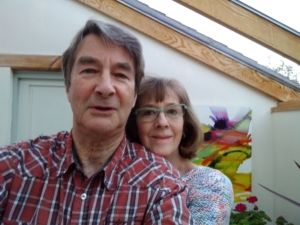 ‘The HCAs supported Diana with whatever she wanted. Diana always insisted on getting dressed; she was staying in bed for a lot of her day by this point, but it was all part of maintaining her dignity. She would point at what she wanted to wear including clothes and jewellery. It was so hard to watch my beautiful, lovely, multi-talented wife disintegrating before my eyes.
‘What impressed me from the very beginning was the professionalism of hospice staff. They cared for Diana but they were also conscious of everything with me. The level of professionalism and coordination was amazing. The healthcare assistants were very, very aware when something needed escalating, and of situations that required other professional input. They worked closely with other external providers too including district nurses; it was seamless and worked without any hitches.
‘On one occasion, a HCA suggested we needed a non-slip bath mat for Diana to safely transfer into the bath to have a shower. Diana was referred to the physiotherapy and occupational therapy team at the hospice, Angela and Miriam, who we fondly nicknamed “The Dynamic Duo.” The team visited on a Thursday, and by the following Tuesday we were having a stairlift installed to help Diana get up and down the stairs. They were so good at spotting things a mile off; they were extremely good at helping me to help Diana in the best way that I could. They taught me how to utilise equipment properly, including lessons on transferring Diana to the commode to make life easier. They assessed, supported and saw things that ordinary people wouldn’t pick up on; and in good time too. They made it a lot easier to care for Diana.
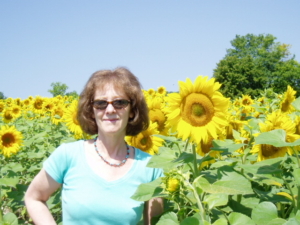
‘Another time, Diana voiced her concerns to Julie, one of the HCAs, about how the whole situation was taking a huge toll on me. I was having a particularly tough time. Julie sat and supported Diana for a long time after her shift ended, and the next call I received was from Rachel, the lead counsellor at the hospice, who arranged to come around to visit me at home to talk through my worries. The caring staff went above and beyond the call of duty. I have continued my counselling sessions with Rachel, and they have been a life saver.
‘Diana was desperate to stay at home. She said she wanted to die at home, as pain free as possible. The staff from Blythe House; their care, support and the equipment organised via them made that possible, alongside palliative medical support from Dr Sarah Parnacott [consultant in palliative medicine at Chesterfield Royal Hospital, providing palliative care to patients across the High Peak and surrounding communities].
‘Diana died peacefully in her sleep at home on the 30th October. I am devastated, but for Diana, being able to die as she wished, I’ll be forever grateful to Blythe House and Helen’s Trust.
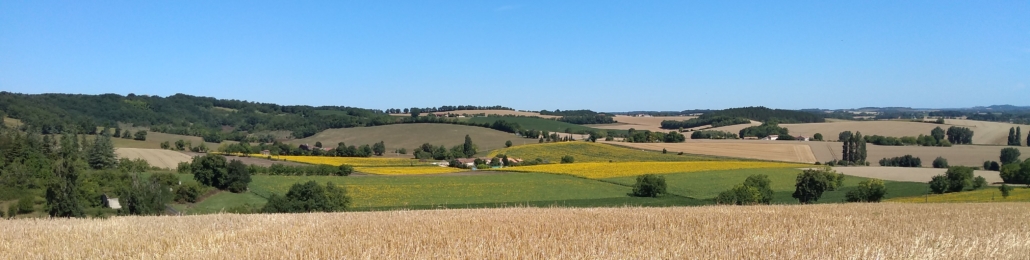
‘I am delighted to plant a sunflower in Diana’s memory this month, to support the incredible, ongoing work of the hospice. The garden of our holiday home in France backs on to a field where sunflowers grow; it is a fabulous sight.’ [Header photo].
If you require any information about all of the services offered by Blythe House and Helen’s Trust, and how we may be able to support you or your family, please call 01298 875 080, or visit our services pages.


