People across the High Peak and Derbyshire Dales who are caring for a loved one with a life-limiting illness, are being urged to seek support.

We provide support and advice to carers who’re looking after a relative or friend who may have an illness such as cancer, chronic obstructive pulmonary disease, heart failure, Parkinson’s or motor neurone disease.

The hospice is commemorating Carers’ Week (7-13 June), an annual campaign to ‘raise awareness of caring, highlight the challenges unpaid carers face and recognise the contribution they make.’

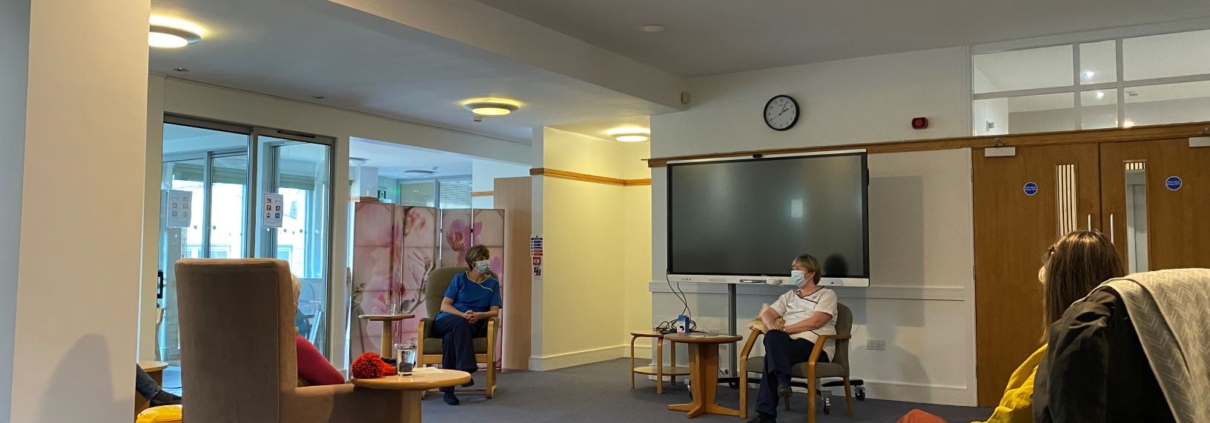
We host a monthly support group for carers, providing a safe and relaxed environment for local carers to share problems, concerns or experiences with the knowledgeable team and with others in a similar situation. Staff also provide one-to-one care and advice for carers including complementary and talking therapies.
Louise Furmston, community engagement lead nurse, explained: ‘Many family members do not see themselves as “carers” when they are living with someone who has a life-limiting illness. Their focus is supporting the person who is ill and they often do not acknowledge the impact upon themselves. They become absorbed in the role of caring, putting the needs of the person they are caring for above their own needs and well-being.

‘Blythe House Hospicecare is here to support “the whole family,” offering a listening ear and exploring “what matters to them,” providing support and advice in relation to their needs.’

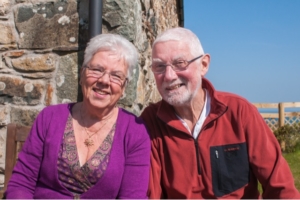
Joy Stephenson’s husband, Chas started to attend Blythe House following his diagnosis with a rare form of blood cancer. Joy was offered carers support from the hospice, before Chas sadly died in January 2021. He received care from the Hospice at Home service, and died in the comfort of his own home.

Joy, from Hayfield, said: ‘The hospital consultant made the referral to Blythe House; and then followed almost two years of what I can only describe as an amazing and wonderful partnership between us and the marvellous staff at the hospice.

‘One really good thing was the opportunity for him to spend some quality time in the company of other men and the chance for a good natter. Not only was Chas pampered, but my needs were also being cared for – a chance to talk about my worries and concerns, and the offer of complementary therapy, so I was able to have some relaxing pampering too. We very quickly came to realise that the whole ethos was to meet the needs of us both, and to anticipate when that help needed to be stepped up.
‘I think the most difficult thing was when to accept the offer for that support to come directly into the home. Inviting strangers into your home to take over much of the caring role was hard. On the one hand, I felt I was abdicating responsibility and I wasn’t sure what to expect. On the other hand, I was becoming exhausted and realised that I was struggling to cope. I shouldn’t have worried; the carers were so experienced and sensitive to our needs and they became welcome friends and always seemed to know exactly what was needed. More importantly, I came to understand and welcome their input, especially when they always seemed to know the right time to step up the amount of care we needed; I never needed to ask.

‘They delivered all this care with compassion, sheer hard work, friendship, love and, so often, much-needed good humour. Above all, they allowed Chas to maintain as much dignity as possible and to die at home surrounded by love with me and my daughter beside him.’

Read Joy’s story.

Find out more about how Blythe House and Helen’s Trust could support you and your family by calling: 01298 875 080, or visit ‘our services.’
We are thanking over 250 local people who give their time for free to support local hospice care, as part of a nationwide celebration of volunteers.

The annual Volunteers’ Week (1-7 June) is a chance for charities like Blythe House Hospicecare and Helen’s Trust to say thank you for the contribution millions of people make across the UK through volunteering.

The hospice’s team of volunteers collectively donate around 590 hours of their time every week, in three key areas: patient services, retail and fundraising.

Blythe House and Helen’s Trust provide palliative and end of life care to patients across the High Peak, Derbyshire Dales and North East Derbyshire.

Wendy Brown, HR advisor, said: ‘My main contact with volunteers during the past year has been due to the rigid Covid regime that we have in place here at Blythe House. From those patient-facing volunteers who test three times per week, to those keying the testing data whilst managing reception, everyone has been amazing. Such enthusiasm, such dedication and passion for their volunteer role. I thank you sincerely for the way in which you fly the Blythe House flag, helping so many who need our support and services within the local community and beyond.’

Anne Hatton, manager at the hospice’s Whaley Bridge shop, commented: ‘Thank you to all our shop volunteers for your precious time, knowledge and expertise that make the shops such a success. You all help make such a difference to people’s lives.’

Becca Gregory, fundraising and events coordinator, added: ‘A HUGE thank you to all of our volunteers; without you the services provided by Blythe House and Helen’s Trust would not be possible. Our fundraising events are a vital source of income to the charity, but they rely heavily on volunteers dedicating their time at every stage to ensure they can go ahead safely and with the highest level of enjoyment for participants. Thank you to everyone that volunteers their time to keep all aspects of the hospice running smoothly.’

As part of the weeklong celebrations, the charity is inviting prospective volunteers to get in touch and find out more about donating their time to support local hospice care.

Vicci Wild, Community Volunteer programme manager, said: ‘We would love to hear from people who might like to give some time by volunteering in one of our hospice shops located in Bakewell, Buxton, Chapel-en-le-Frith, New Mills and Whaley Bridge.

‘We are also keen to hear from complementary therapists who would like a rewarding volunteer role supporting those in our community affected by life-limiting illness. Offering aromatherapy, reflexology and other complementary therapies to local patients and carers, can positively impact their physical and emotional health.’

To find out more about volunteering opportunities at the hospice:

Our annual review for 2020/21 is out now! Featuring information and patient stories about hospice services throughout the Covid-19 pandemic and lockdowns, it highlights the incredible work of our staff and volunteer teams.

The document is dedicated with grateful thanks to everyone who has supported Blythe House and Helen’s Trust during the past year, including local people who have donated so many items, including personal protective equipment to keep our teams safe during Covid-19, our volunteers, patients, families, fundraisers and partner organisations. We are so proud to work with you, and thank you sincerely for your amazing support!

Do you know a local business or organisation that might like to display our annual reviews in their reception/guest areas/waiting rooms? We’d be delighted to give copies out to help spread the word about our services. Please email to arrange: communications@blythehouse.co.uk.

Printed copies of the annual report are available to pick up at the hospice building on Eccles Fold, Chapel-en-le-Frith, and will be soon at our five shops in Bakewell, Buxton, Chapel, New Mills and Whaley Bridge.

Read it online now.

Miriam Haddock (occupational therapist) and Angela Salisbury (physiotherapist) joined Blythe House earlier this year, in brand new roles in the new Community Hub. We’re delighted to have them on board and know they’ll make a huge difference to local patient care. Here they explain more about their roles…

Miriam – What does your role as occcupational therapist here at Blythe House entail?

As an occupational therapist (OT) at Blythe House I am part of Rehab @ The Hub and the wider multidisciplinary team at the Community Hub, also accessing services from Hospice at Home.

OT and palliative rehabilitation look different to every person, but it is based on a patient’s need to find purpose and meaning to further their quality of life. The OT is ideally placed to work with patients helping to ensure their strengths and skills are working in a suitable environment allowing them to do the things that matter to them.

Occupational Therapists in palliative rehabilitation can offer:

  • Activity analysis and advice/retraining on continuing activities and interests that are a priority to them (such as getting in and out of bed, washing and dressing, using the bath/shower/toilet, managing the stairs, preparing drinks/snacks/meals, playing with children on the floor, participation in sports)
  • Working and driving advice
  • Assessment and provision of specialist equipment enabling people to remain as safe as possible and independent
  • Assessment of muscle tone with regard to splinting for hygiene and comfort
  • Upper Limb /Hand Rehabilitation for Chemotherapy Induced Peripheral Neuropathy (CIPN)
  • Lifestyle management advice to cope with fatigue or altered level of independence
  • Assessment of moving and handling and advice regarding all transfer methods throughout stages of illness
  • Falls assessment
  • Sleep management
  • Stress/anxiety management advice and relaxation techniques
  • Cognitive assessment
  • Supporting and educating carers/family regarding patient’s changing level of functional and/or cognitive ability
  • Advice regarding coping strategies for dealing with cognitive impairments
  • Facilitating psychological adjustment to loss of function/roles in life
  • Assistance to participate in leisure activities or develop new leisure interests

The list is not exhaustive. Assessment and intervention can be carried out on a 1:1 clinic basis or as part of a symptom management or educational group.

Tell us a little bit about your OT career to date

I have moved around a lot in my 14-year career as an OT, from the Midlands to the Highlands. This is because my husband is in the Royal Air Force and so we have moved about with his career. This has allowed me to take examples of good practice from around the country and apply it to my own clinical work. I have worked for a number of acute Hospital Trusts and as part of many community teams, both as an active team member and a Team Lead. My clinical experience has been varied; ranging from neurology to surgery and oncology and general rehabilitation.

Angela – What does your role as physiotherapist here at Blythe House entail?

We’ve started here during a really exciting time of development at the Hospice and I think this will allow for flexibility in the therapy services that we build. We want to reach out in to the community and provide a service that responds to the need of our patient group. This is likely to mean our service evolves and changes as time goes by.

Physio’s can work with people with a vast range of diagnoses whether they be respiratory, neurological, lymphatic, orthopaedic or musculoskeletal and with an array of symptoms for example weakness, stiffness, instability, pain, fatigue, breathlessness, falls etc. In addition to this patients can often become debilitated and deconditioned not only due to their illness but also the side effects of treatment they are receiving.

On referral, I will carry out a full and holistic assessment and will work alongside the patient and their families to set a treatment plan towards realistic and achievable goals.

I can also offer a range of treatment delivery options including 1:1 sessions, group therapy, treatments at Blythe house or sessions within the patients home.

Tell us a little bit about your physio career to date

I qualified as a Physiotherapist from Manchester University in 2004. I worked for over 16 years at Salford Royal Hospital covering many clinical areas and departments. I specialised in Neurological Physiotherapy working with patients with a multitude of pathologies and diagnoses such as brain tumours, acquired brain injuries, MND, Parkinson’s, spinal cord injuries and with patients following Neurosurgery. Since 2010 I have worked primarily within the Stroke Service.

Both – So far, what have you found that you enjoy most about working here?

We have received a very warm welcome from everyone we have encountered and worked with so far. We have been privileged to have had a month in which research existing services, networking to understand how we can best work together to support the needs of the local community. Our new colleagues at Blythe House and Helen’s Trust are excited to begin effectively working together. We hope to support their existing services while continually striving to develop, so we are very enthusiastic to begin offering OT/Physio clinics, symptom management groups and education sessions as part of the Rehab @ The Hub.

Both – What are you most looking forward to in the coming weeks as we begin to welcome patients and visitors back to the hospice safely?

We are really looking forward to seeing and being involved in Rehab @ The Hub service, constantly striving to improve and expand the services that we can offer, whilst being able to demonstrate our therapy outcomes. We hope to reach out to the whole community and are looking forward to meeting our new patients and their families.

We are delighted that BRM Solicitors in Chesterfield are supporting us once again with a free will writing month in June.

Suggested donation are:

  • For a single will £75 – funding five hours of Hospice at Home care
  • Mirror will £150 – to pay for a night-sit in the comfort of a patient’s home

Call the team on 01246 555111 to make an appointment ahead of next month.

There’s no obligation to include Blythe House Hospicecare and Helen’s Trust in your will and you don’t need to let us know your intentions. Your will is a private matter between you and your solicitor.

When you consider writing a will, your loved ones will of course be your top priority, but many people also wish to leave a gift (also known as a legacy) to a cause or charity that means a lot to them.

If you decide to remember Blythe House Hospicecare and Helen’s Trust in your will, you’ll be helping to support local families facing life-limiting illness in the future. Leaving a gift is easy and anyone can do it. Whether it’s a sum of money, a specific item or a share of your property, your gift means you’ll always be with us, helping people in your community.

‘Arranging Mum’s funeral, I knew exactly what she wanted; I had no regrets that I’d done or chosen anything wrong, and I knew I’d done her justice.’

Dying Matters week aims to raise awareness of opening up the conversation between families and friends about death, dying and bereavement. One way to do this is to discuss your funeral plans so that your loved ones know what you’d like to happen, and can respect your wishes.

It was widely reported earlier this year that Prince Philip had planned his own funeral – including making his final journey in a Land Rover Defender, and personally choosing the military medals and decorations that he wanted to be displayed.

Dying Matters explained: ‘By taking the initiative and setting out what you want now, you can get on with living your life, knowing that when the time comes your loved ones will know what you wanted and be spared from having to make difficult decisions.’

Cathy Price’s mum, Janet sought advice and support from Blythe House after she was diagnosed with oesophageal cancer in September 2020. Nurses from the hospice called Janet weekly to chat about how she was doing. Janet also took part in the weekly online Community Hub support group meetings alongside other local people diagnosed with a life-limiting illness. Janet very sadly died in March 2021 after the cancer had spread to her lungs.

Cathy, who’s from Buxton, explained: ‘Mum started to feel differently around Christmastime 2019. She didn’t ever normally go to the doctors or seek advice, but she knew deep down something was wrong. Doctors initially thought it was reflux and put her on different medications that did not help. She was finally referred to the hospital for a gastroscopy – it was the day that the first national lockdown was officially announced in March 2020 – and unfortunately, because there was no mention in her medical notes of a lump in her throat, the procedure was cancelled.

‘Lockdown of course stalled everything and nothing happened for months. Mum finally got another appointment to see a doctor. At this point, she wasn’t eating properly and couldn’t swallow solids; she was living off yoghurts and ice cream. Mum and I called 111 and the advisor suggested that Mum went to hospital. It was here, finally, in September, that she was diagnosed with cancer of the throat.

‘Mum underwent radio and chemotherapy at The Christie, so there was a lot of toing and froing between home and hospital every day. She finished her treatment on the 15th December and was able to spend Christmas at home. Afterwards, she became really poorly again, and she was transferred to hospital.

‘Mum enjoyed hearing from staff at Blythe House every week; it gave her someone different to talk to about her prognosis, worries and concerns. Living on her own (though I was in her support bubble throughout the lockdowns), it was nice for Mum to be able to chat to someone different who could provide support and give advice. The Zoom meetings with other local patients definitely had a positive effect on her mood, and she’d relay stories from different participants.

‘When she found out that the cancer had spread to her lungs, there was an opportunity for her to have a tube inserted to help drain liquid. Unfortunately, her lungs were filling that quickly that doctors weren’t able to undertake the procedure the first time round. After this, Mum declined the second chance to try inserting the tube, and so a plan was put in place for end of life care.

‘Despite Covid-19, because Mum was so poorly, I was able to go and see her in hospital. I spent every day with her and we talked so much. One of the things we talked about was her funeral. She asked me to get everyone a drink on her, and she said she wanted everyone to wear bright colours and silly hats! She asked me “talk me through the day then, what’s going to happen?”

‘Mum was transferred to Ashgate Hospicecare in Chesterfield on 1st March 2021; she only spent six hours there before she sadly died.

‘Mum had already paid for her funeral so that wasn’t an issue but I had to think about how to arrange the proceedings. I knew it would be hard to get everyone a drink, because we weren’t allowed a wake or a celebration – only 30 people were allowed to attend her funeral! We did have a web cam set up so that other people could attend from afar – including my sister who lives in America, and my best friend in Australia.

‘One night whilst I was on FaceTime to my sister, we were chatting about arranging the funeral and fulfilling all of Mum’s wishes. We came up with the idea of giving out goodie bags. There and then, we ordered brightly coloured bags off the internet – Mum did not want anything dull! In them, we put a mini bottle of prosecco, some rosé lemonade or a coloured beer; a candle; a party blower and an animal hat; a butterfly decoration as Mum loved butterflies; and a gift tag. My children, Milly and Leo, and I, also made heart-shaped cheese and ham sandwiches, and we put a sausage roll in each bag. Arranging the funeral to respect Mum’s wishes gave me something to focus on and kept me busy in the two weeks following her death; the planning kept me going.

‘When the funeral was over, the kids and I returned home and the mood was a bit flat. It was a strange feeling, and I thought about getting started on making some tea! Just then, my phone pinged, and it was photograph of my friend wearing her party hat and holding up a glass to toast Mum. The next minute, another photo came through, and they kept on coming through the night. The kids and I took our own photo and I sent it around family and friends. It was so lovely as it brought us all together without actually being together physically.

‘Now that I know what’s involved in planning a funeral and expressing your wishes, it is definitely something I’d do with my loved ones. I felt proud to arrange Mum’s funeral because I knew exactly what she wanted; I had no regrets that I’d done or chosen anything wrong, and I knew I’d done her justice.’

To help you to think about your funeral wishes, Dying Matters and the National Association of Funeral Directors have produced a simple form, which lets you create a personal funeral plan that reflects you as an individual. Download it now

We are looking forward to commemorating Dying Matters Awareness Week from Monday (10th May), to help open up the conversation around death, dying and bereavement.

Dying Matters explains: ‘This year, the week will focus on the importance of being in a good place to die.

‘There is no right or wrong place to die; it will be different for everyone. But it is important for families to think about it, to talk about it and to plan for it.

‘At Dying Matters, we want people of all ages to be in a good place when they die – physically, emotionally and with the right care in place. Getting there means having some important conversations and taking some careful decisions.’

In our hospice reception area, we have a ‘What matters to me’ board, where we’re inviting patients and visitors to write down their thoughts, ideas and opinions for what matters to them at the end of their lives.

Some suggestions include:

  • Where would you like to die?
  • How would you spend your last day in this world?
  • How would you talk about death with your children?
  • What does your funeral look like?
  • How would you like your body to be dressed?
  • What do you want your coffin to be like?
  • What music you would like to play at your funeral?
  • Where would you like to visit before you die?
  • Where would you like to be when you die?
  • Many women these days have a ‘birth plan’. But what would be in your ‘death plan’ and when would you start writing it?
  • How would you like to be remembered?

If you’re not heading to visit the hospice next week, we’ve set up a digital board, so you can share your ideas online. To do so, just follow this link and double click anywhere on screen to write your own anonymous comment: What matters to me

To commemorate Dying Matters awareness week (10-16th May 2021),  Rachel Leech, children and young people’s counsellor (left) and Lorna Barrett, family support worker (right), have written a blog on how to talk to children about death, dying and bereavement.

So often, the first question asked by our patients and families when they’re diagnosed with a life-limiting illness or they are nearing the end of their life is – “What do well tell the children”? Followed by a series of thoughts which include:

  • I don’t want them to worry
  • They shouldn’t have to hear this
  • They are too young to understand
  • I can’t my head around this, how can they?
  • I want to protect my children and their innocence
  • I don’t want to hurt them or make things worse

There is a natural, fear-based need to protect children and young people from upset. Dying Matters encourages us all to talk about death. That conversation includes children and young people who are often naturally inquisitive about life and death.

Lorna explained: ‘A recent visit to the cemetery with my five-year old grandson to a family grave provoked the discussion about my own death in which he concluded: “You can’t die because there isn’t enough space for more words on that headstone.”

‘Comical, BUT the important thing was the conversation about death and dying.

‘In my own childhood, I experienced the sudden and tragic death of a much-loved older brother. Aged ten, my parents and the many protective, loving adults around me thought is best to NOT tell me of the circumstances surrounding his death and I was not aware of his funeral taking place. Nor was there discussion about his loss for many, many years into my adult life.

‘What I needed was the truth, to be included, to contribute to the shared grief and loss. The word DEAD not to be used in place of the whispers and euphemisms of the adults around me.’

We need to talk to the children – knowing what is going on can reduce anxiety

  • It gives children and young people permission to talk, ask questions, say how they feel and talk openly to you
  •  It makes sense of the tears and the upset around them
  •  It can help them cope better with difficult situations in life

The effects of not talking:

  • Can leave children and young people frightened and confused
  • Alone with their worries with no one to talk to
  • Imagining something worse than the reality
  • Misunderstanding and misinformation can lead to a lack of trust

Children are more able to deal with stressful situations when they are given the truth and support to deal with it. Some things that can help with talking and help to build resilience:

Create a worry jar/box – Family members draw or write their worries, questions, and fears, put them in the jar/box and open them together. You can explore together if they are shared worries, if you have answers to questions, or if you don’t know. It’s OK to not know something. It’s good to share your own worries (in an age appropriate way) in the jar/box. This models to children healthy open discussions and shared emotions.

Create a soothe box or emotional first aid kit – You can do this collectively as a family. You may put pictures in the box, blankets, messages and notes. Inspiring comments. Ideas to motivate or soothe. Fidget toys, tactile objects. Each family member may have their own soothe box that way you can explore and celebrate everyone’s own individual soothing/emotional first aid needs.

Muddles, Puddles and Sunshine – This is a fantastic interactive book created by Winston’s wish all about capturing memories and thoughts when someone special has died. Children tend to puddle jump with grief and difficulties. One moment being deep in the puddle of upset and worry and the next jumping out and playing happily. View online here.

Don’t always rely on words with children – Their brains are still developing and their understanding of illness and death may be very different to yours. I often use more creative ways to explore emotions and thoughts such as if your thought or feeling was a colour what would it be? What texture would it be? Where does it live in your body? Can you doodle/draw it? What colour/texture do you need when this is around? For more information on children’s understanding of death you can visit Child bereavement UK.

Some fantastic books:

  • The Huge Bag of Worries by  by Virginia Ironside – a great book for any age showing how it’s good to share worries. See here.
  • Starving the Anxiety Gremlin by Kate Collins-Donnelly – a book that I return to again and again for children and young people to help with anxiety. They have different books for different ages. I like the 5-9 age book for simple exercises and explanations. See here.
  • Lifetimes: The Beautiful Way to Explain Death to Children by Bryan Mellonie – a book suitable for young children introducing lifespans and death without any religious connotations. I had this book on my children’s book shelves from when they were very young. See here.
  • The Secret C by Julie A. Stokes – a book for children and young people about cancer that is straight talking and easy to understand. See here.
  • Sad Isn’t Bad, a good-grief book by Michaelene Mundy – see here.

Let’s get this conversation started!

People across the High Peak and Derbyshire Dales who are looking to give something back to their community and support a local charity, are invited to find out more about rewarding opportunities to volunteer in hospice shops.

We are recruiting volunteers to support their shops in Bakewell, Buxton, Chapel-en-le-Frith, New Mills and Whaley Bridge.

The retail outlets are responsible for bringing in over a quarter of the money needed every year to provide free palliative and end of life care to local patients.

On some days, the shops are not able to open or have to close early due to a limited number of volunteers.

Volunteers at the shops help with a range of tasks including sorting donations, displaying items for sale, pricing stock, managing tills and money, and supporting customers.

Alex (right), with mum, Brenda (middle) and auntie, Hilary (left) who are hospice retail volunteers

Alex Clark from Buxton volunteers at the hospice shop in her hometown every week. She said: ‘It was back in 2011 when my mum, Brenda noticed that Blythe House’s shop was closed on Wednesdays because unfortunately the team just didn’t have enough volunteer capacity to be able to open it.

‘I had recently been made redundant and mum said to me: “We could do that!” so we got in touch with Blythe House, and offered our support.

‘Volunteering for Blythe House is really good fun and sociable, everyone is so friendly. You can see the results here and you really know that you’re doing something to help. I know several people who’ve benefitted directly from Blythe House; nobody wants to have to access the services here but knowing they are there if they are needed is very comforting and they make a huge difference to so many local people.’

Victoria Wild, Community Volunteer programme manager at the hospice, commented: ‘Without our volunteers, Blythe House and Helen’s Trust simply could not function. Our team of over 250 volunteers collectively donate approximately 590 hours of their time to us each week. They play an integral and vital role, and their support means that we can spend the maximum amount of money directly on care for our patients and their families. We are so grateful for the time and commitment they give.’

Find out more about becoming a retail volunteer for Blythe House and Helen’s Trust, and apply online.

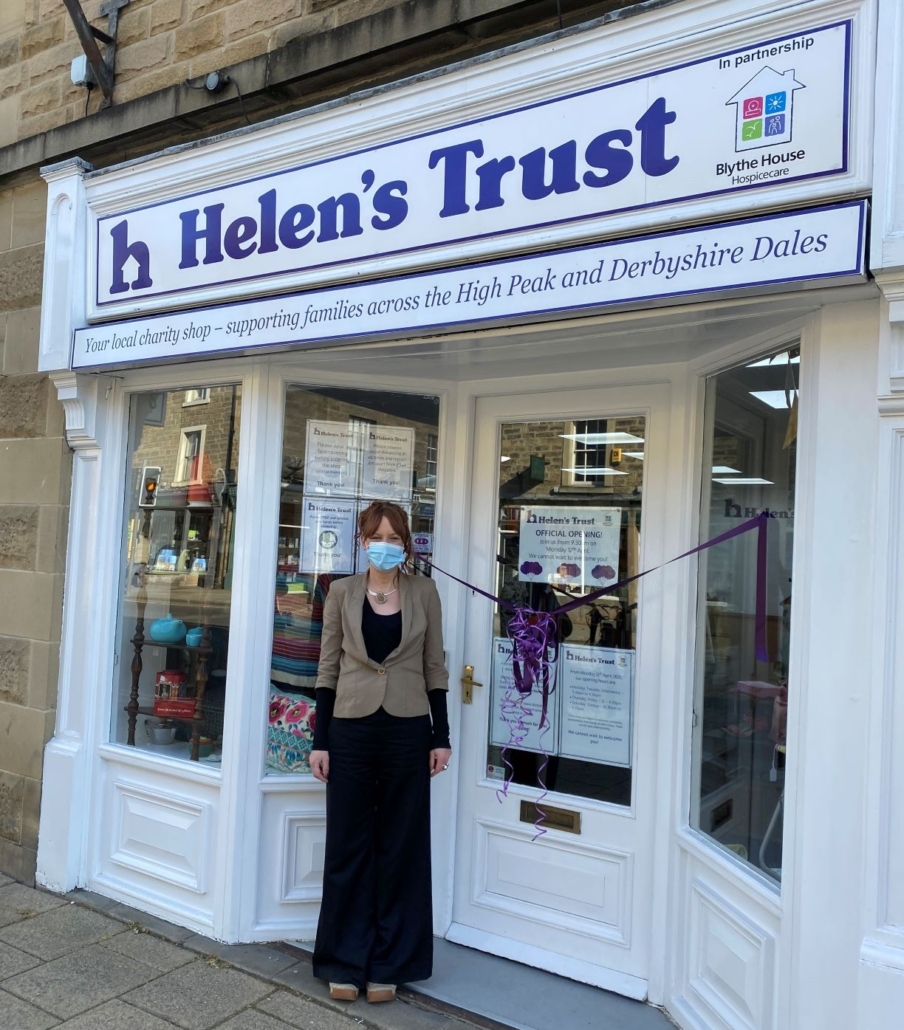
We have opened the doors to our brand new shop in Bakewell.

Staff and volunteers from Helen’s Trust, in partnership with Blythe House Hospicecare, cut the ribbon at the new retail outlet on Matlock Street today [Monday 12th April].

The shop stocks a wide range of items including men’s, women’s and children’s clothing; homeware; books and CDs.

Money raised in store will go towards providing free palliative and end of life hospice care in the comfort of patient’s homes across the Derbyshire Dales and North East Derbyshire.

Covid-safe celebrations were well underway as excited volunteers and local customers showed their support, on the day that non-essential retail outlets could re-open following easing of England’s lockdown restrictions.

The shop is the newest addition to Blythe House’s other retail outlets, in Buxton, Chapel-en-le-Frith, New Mills and Whaley Bridge.

The popular high street stores are responsible for bringing in over a quarter of the money needed for the charity to provide free care and services to local patients and families.

Tim Mourne, chairman, and Dr Louise Jordan, deputy chair, of the charity’s board of trustees cut the ribbon to officially open the shop this morning.

Dr Jordan, who is a GP at Baslow Health Centre, said: ‘As a founding trustee of Helen’s Trust, I am delighted to see the charity continue to grow from strength to strength. This year we are celebrating our 20th anniversary, and we’re supporting more people across our local communities than ever before. The new shop will help us to continue achieving and smashing our goals in the future; supporting hundreds of local patients who wish to stay in the comfort of their own home at the end of their lives.’

Tim added: ‘I am so pleased to officially open the new Helen’s Trust shop alongside Dr Jordan. Since the partnership between Blythe House and Helen’s Trust began last year, we have doubled our Hospice at Home clinical output in the face of the Covid-19 pandemic. The shop opening is the latest achievement of our successful charity merger, and we know that our loyal, local supporters will be on hand to back it, by volunteering, donating or shopping here, to support local hospice care now and in the future.’

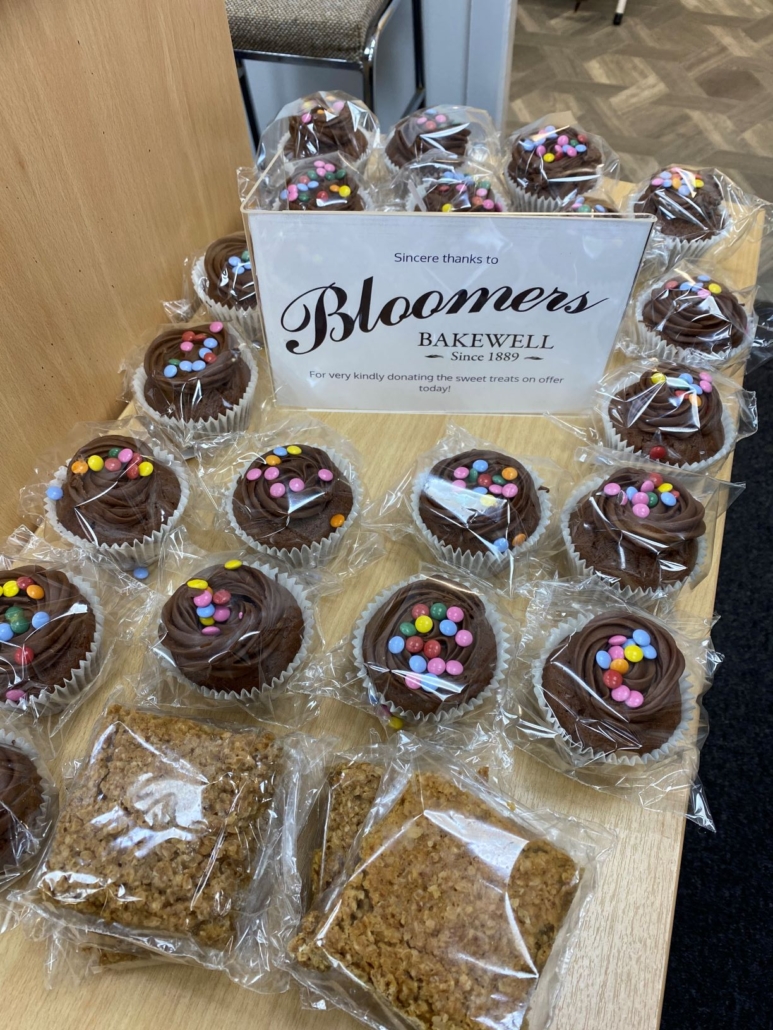
Sincere thanks go to Bloomers of Bakewell for donating individually wrapped and Covid-safe treats for the special occasion.

Find out more about Blythe House and Helen’s Trust shops including opening times.

Learn more about volunteering at the new Bakewell shop, or any of Blythe House’s other High Peak stores.