

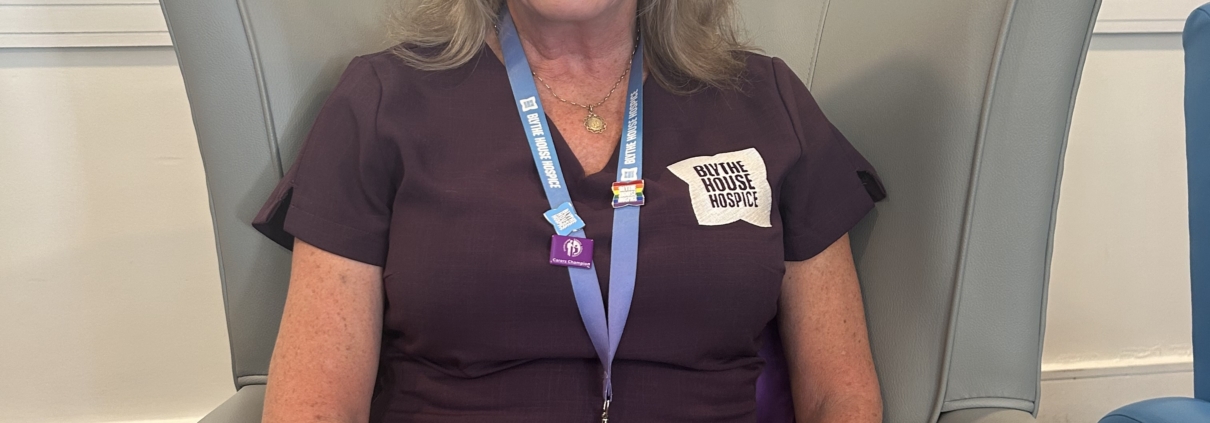


From the 13th to the 19th of May marks Mental Health Awareness Week, a significant time for reflection, support, and action. In 2024, the focal point is on movement and the positive impacts this can have on our mental well-being.
Life’s challenges often leave us feeling overwhelmed, which may lead to people feeling as thought they want to hide away indoors, away from the world. However, as the theme suggests, even the smallest movements can make a huge difference in supporting our mental health. It’s not about grand gestures; it’s about embracing manageable activities that uplift our spirits.
Here are some simple yet effective suggestions to incorporate movement into your daily routine:
- A Leisurely Stroll: Take a moment to step outside for a short, easy-level walk. This may be around your neighbourhood or a nearby park, staying active and setting yourself small challenges and goals supports you mental health in numerous ways.
- Household Movement: Sometimes, the best movements are those within the comfort of our own homes. Engage in light chores, rearrange your living space, or simply dance to your favourite music. Every movement counts towards improving your mood and overall well-being. A clean tidy environment can often make you feel less stressed, organised and have a clear head space.
- Social Interactions: Human connections play a crucial role in supporting mental health. Arrange to meet a friend for a coffee or a catch up with a loved one. Sharing experiences and laughter can provide a sense of belonging and emotional support.
- Nature Escapes: If possible, take a scenic drive to a nearby park or countryside. Nature can be incredibly therapeutic, offering moments of relaxation and reflection from life’s hustle and bustle.
Remember, the journey towards better mental health is a gradual process, and it’s essential to approach it with patience and self-compassion. Each day presents an opportunity to prioritize self-care and set achievable goals that align with your needs and capabilities. You’re not alone in this journey; reach out for support when needed and celebrate the progress, no matter how small.
We offer a counselling/psychotherapy service for hospice patients and carers who are experiencing emotional distress as a result of their own life-limiting illness or the illness of someone significant to them. We also bereavement support for carers, families and friends following the death of someone who received care from Blythe House Hospicecare and Helen’s Trust .
For children and young people aged from 4 – 18 years old we offer counselling and bereavement services, which is open to anyone if their relative is accessing, or has accessed support from the hospice, or they have a parent or sibling that has a life-limiting illness, or has died.
Find out more about Blythe House Hospicecare and Helen’s Trust counselling and bereavement services here.
Be sure to take each day as it comes, prioritize self-care, and set achievable goals for yourself. You’re not alone in this journey

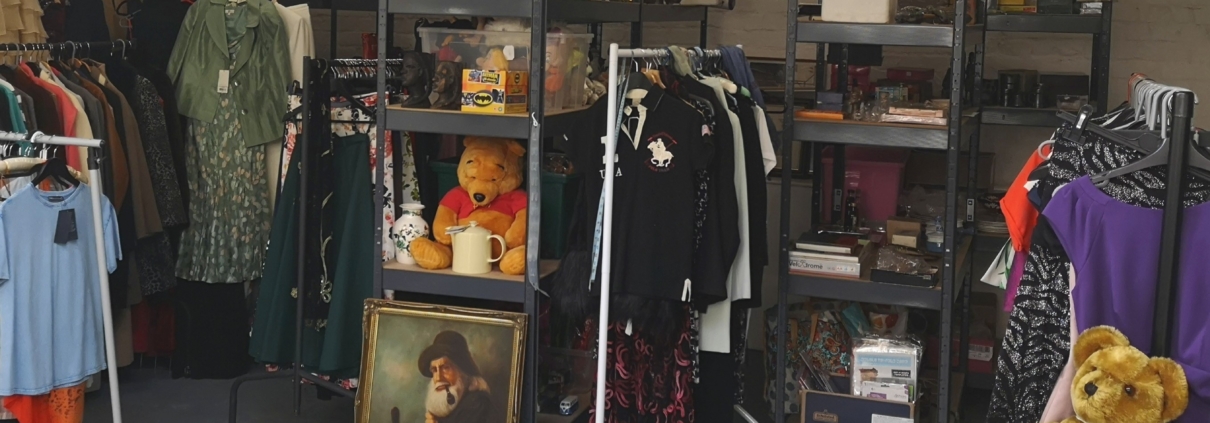
I joined the hospice as ecommerce manager in May 2021, taking care of the charity’s eBay site and team to raise vital funds for local hospice care.
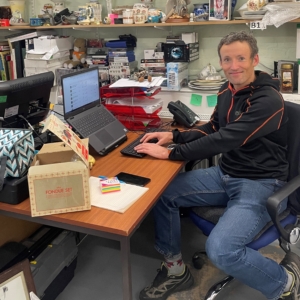 The eBay site is celebrating its 15th anniversary this month! After launching in March 2009, the hospice has sold over 18,000 items online, has 1,900 followers and has a 99.9% positive feedback rating which we’re very proud of!
I’m delighted to let you know that we’ve recently relocated to a new, larger premises on the Ringstones Industrial Estate in Bridgemont, giving us more space to expand and develop online sales.
To maximise the potential of this venture we need your help! If you have computer and photography skills, or an interest in antiques, designer clothing, rare books, and other bespoke and rare items, we would love to have you as a member of our volunteer team. The extra space allows us to increase the capacity of our volunteer base and consequently, boost the volume of listings and sales to support the charity.
We are also looking for donations of items that we can sell on our eBay platform such as antiques, designer and vintage clothing, photography equipment, games consoles, electronics, rare books and jewellery. If you have any such items, we would be very thankful if you would consider donating them to us.
If you have yet to visit our online store please do take a look and add us to your favourites. You will be sure to find a wide range of items; whether you are a model rail enthusiast, amateur photographer, or want a new outfit for a special occasion, we are certain you will find something to suit your needs.
By making a purchase or volunteering your time, you will be helping us continue to raise money for the hospice and make a real difference to our patients.
To celebrate moving to our new premises, we’re offering customers a 15% discount on our eBay site for two weeks – from 7am on Monday 8th April until 7am on Monday 22nd April. Anyone can claim the discount who enters the coupon code ‘BLYTHE15’ at checkout (the only exceptions are model railway items).
Support us by shopping on eBay.
If you’re interested in volunteering with the eBay team, or you have potential items to donate, please don’t hesitate to contact me.
Find out more about general volunteering opportunities at the hospice.

To commemorate Children’s Book Week from 6th to 12th November 2023, Rachel Leech, lead counsellor, has put together a list of some of her favourite books that she recommends to families and children who she is working with.
 Parents and caregivers rightly worry if they’re faced with having incredibly tough conversations with children and young people about the heavy subjects of death, dying and bereavement. We panic about saying the wrong thing, causing unnecessary hurt and distress, making things worse, and children being too young to fully understand what’s going on.
The books below are some of my recommendations (in alphabetical order), and why I feel they will really help you to open up those tricky conversations. All of the links are to Amazon; however, this is just for illustrative purposes and you may wish to buy or read the book via your local library or high street book store:
Badger’s Parting Gifts by Susan Varley – Heartfelt book about a much-loved Badger that knows he must soon die, so he does his best to prepare his friends. When he finally passes away, his friends are grief-stricken, but one by one they remember the special things he taught them during his life. By sharing their memories, they realise that although Badger is no longer with them physically, he lives on through his friends.
Calm – Mindfulness For Kids by Wynne Kinder – Mindfulness is a big word for a simple idea – it is paying attention, with care, to one moment at a time. The perfect introduction to mindfulness, this children’s book teaches kids how to be mindful by focusing their thoughts and noticing the world around them using fun activities.
Muddles, Puddles and Sunshine: Your Activity Book to Help When Someone Has Died by Diana Crossley and Kate Sheppard – a beautiful memory book that children can complete including activity suggestions for the whole family.
Starving the Anxiety Gremlin by Kate Collins-Donnelly – Not a children’s book but an invaluable book for adults related to children aged 5 to 9, offering techniques and strategies to help with anxiety and worries.
The Huge Bag of Worries by Virginia Ironside and Frank Rodgers – A fantastic story for emotional literacy that encourages children to open up conversations.
The Invisible String by Patrice Karst and Joanne Lew-Vriethoff – A beautiful story for children who are struggling being apart from family members or friends. Not about bereavement but talks about maintaining the connection, so also helpful with bereavement or life-limiting illess.
The Secret C: Straight Talking About Cancer by Julie Stokes, Jane Fior and Peter Bailey – This book provides children with easy-to-understand information about cancer. I use this frequently to offer families a way to talk openly in an age-appropriate way when someone is diagnosed with cancer.
The Whole Brain Child by Dr Tina Payne Bryson and Dr. Daniel Siegel – Another book for adults offering insight into child behaviour with strategies to respond in a neurologically developmentally helpful way.
When Dinosaurs Die: A Guide To Understanding Death by Laurie Krasny Brown and Marc Brown – This is a question that I often find adults struggle to work out how to explain to children. The book covers topics including what does alive mean; why does someone die; what does dead mean; feelings about death; saying goodbye; keeping customs; what comes after death; and ways to remember someone. It also has a useful glossary at the back addressing the meaning of words such as cremation.
Why Do Things Die? by Katie Daynes and Christine Pym – An excellent flip-the-flap book for young children explaining what is alive and what isn’t (teddies etc.) with simple and child-friendly questions answered.
I hope that if you’re a parent, grandparent, guardian, school staff member or carer who is struggling with having to have these incredibly complex and difficult conversations with a child in your care, that amongst some of the recommendations on this list, there is a suggestion or two that might be of interest to you.
I am incredibly proud that my team and I work so hard to support young people aged from 4 to 18 years old across the local community with a counselling and play therapy service, which includes a specially-adapted play room full of toys, arts and crafts activities that children can utilise to express themselves when talking is sometimes too hard.
You may also find another article on our website interesting to read – written by myself alongside a colleague who has now retired back in 2021 to commemorate Dying Matters Awareness Week. We blogged about how to open up and have conversations with to children about death, dying and bereavement. Read it online now.
Find out more information on our counselling and bereavement service.
If you’d like to talk to me directly about any of the issues raised in this blog, I’d be delighted to speak to you via: 01298 875 080.

Our hospice eBay site celebrated its 14th anniversary back in March, with over 15,000 items sold since its inception and thousands of pounds raised for local patient care.
 Laurence Carr from Whaley Bridge began supporting the hospice several years beforehand, and spearheaded an initiative to set up the online shopping outlet on behalf of the hospice. Since then, he has personally raised over a quarter of a million pounds for hospice care.
Here, our dedicated volunteer shares in his own words, how he came to be involved – and how the site has grown so significantly over the years…
It’s strange how we get from one place to another in life. This story is about Blythe House, volunteering, raising money for the hospice by selling antiques and collectables on eBay, and how it all came about. But, it all starts in a strange way leading to unexpected life changes.
Back in 2006, I was doing quite well in life, owning and managing a medical equipment supply company. Work was quite hard; stressful but exciting. I was travelling a lot including trips to China, Japan and Taiwan.
I can still remember one day, quite suddenly feeling quite ill for no obvious reason; just a general feeling of being unwell, loss of appetite and similar symptoms. After a few days of gradually feeling worse, I went to see the GP who seems unconcerned (‘It’s just a virus!’) but who arranged for a set of standard blood tests just to check everything was OK.
The next day, I had a telephone call: ‘The doctor needs to see you about your blood test results!’ I was asked to come in straight away, and I will never forget the shocked look on the doctor’s face when he read the blood test results. He was quite blunt: ‘Your test results for liver function are at very dangerous levels, you need to be in hospital now!’ And later that day, I was in a hospital bed which was to be my home for the next four weeks, as doctors worked on preventing my liver from failing.
In fact, I was in and out of hospital for the next six months with hepatitis. Not because of drinking too much wine or anything like that, just bad luck that I was apparently suffering from a rare autoimmune disease. Eventually the condition was brought under control, but it left me feeling tired and unable to work for more than a few hours a day at best. I had to give up running my business and essentially retire to try and recover my health and fitness. In my mid-fifties, this was all totally unexpected and quite a shock.
After a few months, while still being treated for my now chronic (but fairly well controlled) liver condition, I was feeling a bit better and wondering how I could reintegrate myself into life. I was walking along Whaley Bridge High Street and passed the Blythe House charity shop (at its old address, not the current location). My eye was caught by a large, rather battered, model of a British World War Two destroyer ship in the window, HMS Cossack. I remember this clearly because my uncle had been the First Officer on this destroyer in 1940 and had become quite famous for leading the boarding party in what was known as “The Altmark Incident.” My immediate thought was: I ought to buy this model and refurbish it in his memory, and to give me a project to help my recovery. I went into the shop to find out the price.
The shop manager was at the till and when I enquired about the model she told me that unfortunately someone else had already bought and paid for it, and was going to collect it in a day or two. This was a disappointment but as I turned to leave, I saw a sign asking for volunteers to help in the shop.
I had never considered volunteering but suddenly it seemed to me that it might be a useful way for me to start doing some organised, routine and not too stressful work to help with my recovery. In addition, I had many years of sales experience which might prove useful in a retail setting. I honestly wasn’t thinking too much about volunteering to help the hospice, more about helping myself by doing something useful.
As the shop manager was still at the till I made an enquiry about volunteering and she seemed quite pleased that I could give some time to work in the shop, maybe twice a week for half a day. She gave me an application form to complete and about a week later I found myself working in the shop.
My routine was quite quickly established; sorting donations, pricing and helping on the shop floor. I really enjoyed the role as it was really very varied and I found my experience in business was quite useful and the shop manager quickly had me handling the cash and taking it to the bank.
One day, we sold a piece of glassware or pottery to a customer who paid a pound or two and then immediately told us: ‘I can sell this on eBay for £60 easily! I love this shop; your stuff is so cheap!’ I found this strangely annoying as she seemed so proud of making money from a charity shop purchase. I rather flippantly suggested to her that she might like to donate some of the profit to the hospice which was met with a slightly abusive response and the customer left the shop.
This incident made me think. The customer was probably right, the item she bought was quite possibly more valuable than the price we had placed on it. She probably would be able to sell it on eBay for £60. Why didn’t we do this ourselves?
I talked to the manager who didn’t seem to be excited by the idea. She said it seemed complicated and might be difficult to do for a whole range of reasons and anyway nobody in the shop understood how to sell items on eBay or how to handle the process of identifying suitable items, pricing them and shipping them to customers. However, after a few weeks of gentle nagging she finally agreed to allow me to try it with a few selected items.
I honestly don’t remember the very first item I sold on eBay; I think it was probably an old camera. I had my own personal eBay account and used this to list and sell a few items on behalf of Blythe House; this would have been in 2008 I think. The process was quite straight forward. While doing my normal work in the shop, I would pick one or two items that I thought might sell well, cleared them with the shop manager and took them home to photograph and list on eBay. I was really quite surprised by the money we started to make as some of the items I found got surprisingly good prices.
I think we continued with this for about a year. At this point other people in the hospice became aware of what I was doing. I had a meeting in early 2009 at the hospice and we agreed to try and see if we could start to sell even more items on eBay and raise even more money. We decided to set up a Blythe House eBay account and to make the eBay selection and sales process a bit more business-like.
I was asked if I could organise this until someone else could take over on a more full-time basis and I agreed. I didn’t realise the temporary arrangement would last for over ten years! I stopped working as a general assistant at the shop and became the first ‘eBay volunteer,’ although I still spent a lot of time at the Whaley Bridge shop, as well as Buxton and other shops, looking for treasures.
I now started selling on eBay at a much higher level. I quickly found myself managing the whole, rapidly growing process and from a personal point of view, it felt as if I was back running a proper business (even though it was voluntary!) It was a great help to me in recovering from my illness and getting me back to feeling like I was doing something important again.
Over the next few years the sales grew rapidly, and I found I was selling tens of thousands of pounds worth of donated items on eBay, in fact my total sales on eBay came close to quarter of a million pounds between 2008 and 2020. We found many interesting objects to sell over the years; the 16th century bible that sold for over £1,000; 18th century silver, rare stamps and coins, antiques, prints and paintings, rare first edition books and many more items too numerous to mention.
Many other people became involved in the eBay sales. I had a huge amount of help from volunteers including Archie Gillespie, who found many rare and exciting books and Tony Barratt, who provides tremendous expertise on model railway items. Many other people have provided long-term and invaluable support, and I want to thank them all!
We now have a professional online and eBay sales organisation which I feel very proud to have played a part in getting to where we are today. I still have the report and presentation I submitted to Blythe House management some years ago which described and recommended the organisation we essentially have today.
I’m still involved as a volunteer with eBay. Only a few weeks ago a small, battered, old model railway engine arrived from one of the shops. It only had three wheels, didn’t work and looked ready for the dustbin, but I asked Tony to have a look at it as it seemed quite old. Tony suggested it might still be worth a few pounds so I listed it on eBay. It fetched £310 and showed that these things still have the power to surprise!
In summary, I’m not sure who gets the most of my volunteering, me or the hospice. I should thank Blythe House for giving me the opportunity to volunteer, for supporting me over the years as I recovered from my illness and for providing a business opportunity (even if unpaid!) to start and grow a new and exciting business. In addition, I have learnt so much about antiques, collectables, and similar treasures that I can now walk into any charity shop and spot a rare or under-priced item at 100 metres in seconds. I think I got more out of this than the hospice, although on the other hand I had raised nearly quarter of a million pounds so maybe its 50/50!
Rosie Aston, ecommerce coordinator at the hospice eBay unit works closely with Laurence and said: ‘The time that Laurence has spent and the amount of money that he has raised for the hospice is almost incomprehensible. He has done an amazing job in founding our eBay business and after so many years continues to raise vital funds for the charity, selling many of our antique and vintage finds.
‘On a personal level, it is wonderful to have Laurence’s knowledge on tap. Valuing and selling antiques and vintage items can be a minefield and there is so much information to trawl through which can differ wildly! It is always a pleasure to have a chat with Laurence and gain something from his encyclopaedic knowledge. We benefit immensely from his expertise and dependability. I have learnt so much from him over the three years I have been selling items on eBay and feel so much more confident when valuing an obscure piece.’

Ruth Brown became a member of our board of trustees in 2021, following her retirement as the manager of our Hospice at Home service, and a nursing career spanning almost two decades. Here, in her own words, Ruth explains how she is ‘very proud’ to be a trustee for the charity, and what she gets out of her role…
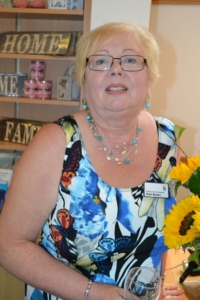 ‘I retired as Hospice at Home manager at the end of March 2021. I had shown an interest in joining the board during my six years at the hospice, so once eligible on retirement, I expressed an interest. I was invited to join the board in September, and attended my first board meeting in November 2021.
‘Ending my nursing career at Blythe House, I had the opportunity to establish Hospice at Home as a new service. As an advocate and with passion for the best end of life care; this was a dream come true. Blythe House believed in me and I wanted to give back to the charity and support its continued growth and success.
‘When joining the board, you become part of a committed team with a shared responsibility to keep the charity safe; to do our best for our communities who access our services; and act as an ambassador.
‘Achievements are shared rather than on an individual basis. We are seeing the hospice continue to grow, and the new Hospice at Home rapid response service is a great achievement, further supporting our Hospice at Home care delivery.
‘The board continues to consider expansion of any retail opportunities and would be keen to grow in the Derbyshire Dales, where our demand for services is increasing. We continue to support growth of our Hospice at Home team and look to secure funding opportunities through the work of Shane O’Reilly, our CEO.
‘Being a trustee is rewarding and allows you the opportunity to influence care delivery in your community. You build new friendships and meet the staff who provide many of our services.
‘A quarterly board cycle includes clinical committee which I attend as a clinician; finance committee; and then the board meetings, with an annual AGM. These all happen on Monday evenings. We have a couple of Saturday mornings each year where we come together to consolidate as a team and look at specific issues.
‘Trustees may be invited to attend the monthly staff meeting on Wednesday morning for an hour or so. I feel this is a great opportunity to connect with our staff and let them get to know us and that they matter. It is essential that you are available for as many meetings as possible however the occasional apology is accepted.
‘As well as being a trustee, I volunteer my time at events and in one of the hospice’s high street shops. This is not compulsory; however, it is a great way of meeting the volunteers who are such an essential asset and keep our charity running.
‘My first eighteen months as a trustee have been rewarding with lots of opportunity for debate and decision making, and I hope to offer my services as a trustee for the foreseeable future.’
Could you make a difference and join a board of trustees with an ambitious strategy to grow the amount of high-quality care and support services to people affected by life-limiting illness across the High Peak, Hope Valley, Derbyshire Dales and North East Derbyshire?
We are seeking to recruit passionate and committed new trustees to our board to bring additional knowledge and input, to help shape future strategy and direction for growth at a crucial time for the organisation. Find out more.
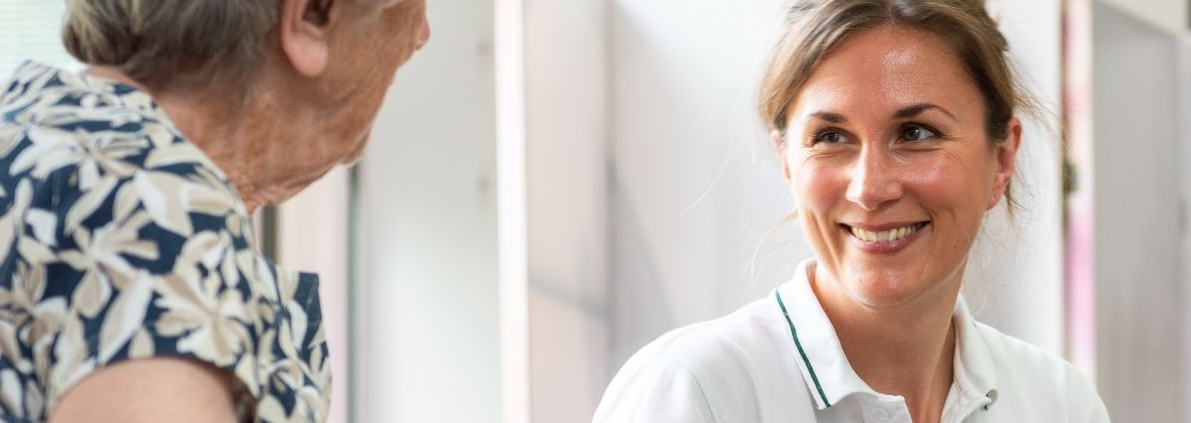
Miriam Haddock is the occupational therapist (OT) here at Blythe House and Helen’s Trust. She has worked as an OT for over 15 years; moving around a lot from the Midlands to the Highlands, due to her husband’s job in the Royal Air Force. These changes have allowed Miriam to gain knowledge of good practice around the UK, and then apply it to her own clinical work.
In the past, Miriam has worked for a number of hospital trusts, and being a part of community teams, both as an active team member and a team lead, is a great passion of hers. Miriam has been able to gain varied experience in neurology, surgery, oncology and general rehabilitation.
For Miriam, a favourite aspect of here role at the hospice is: ‘Having the privilege to be welcomed into someone’s home at a time when they are perhaps at their most vulnerable, both physically and psychologically. I often get to know not only the patient but have the pleasure of meeting their family too, where on many occasions multiple referrals will be made to the hospice team, enabling us to support everyone involved.’
Miriam said: ‘Whilst working alongside colleagues internally at Blythe House and Helen’s Trust, I also get to work with lots of other community teams including: the neuro team, district nurses, community matrons, rapid response, community rehab team, GPs, continuing health care, to name a few. I love working with such a variety of people, all focused on the same aim, to provide the best possible care for the patient and their family.’
An OT provides practical support to empower people to overcome barriers that are preventing them from doing activities (occupations) that matter to them. Providing this support at Blythe House and Helen’s Trust increases people’s independence and satisfaction in all aspects of life.
In her day-to-day role as an OT, Miriam helps to support and educate patients with:
- Activity analysis, advice and retraining on continuing activities and interests that are a priority for a patient (such as getting in and out of bed; washing and dressing; using the bath, shower and toilet; managing the stairs; preparing drinks, snacks and meals; playing with children on the floor, and participation in sports)
- Working and driving advice
- Assessment and provision of specialist equipment to enable people to remain as safe as possible and independent
- Assessment of muscle tone with regard to splinting for hygiene and comfort.
- Upper limb and hand rehabilitation for chemotherapy induced peripheral neuropathy (nerve damage caused by chemotherapy)
- Lifestyle management advice to cope with fatigue or altered level of independence
- Assessment of moving and handling, and advice regarding all transfer methods throughout stages of illness
- Falls assessment
- Sleep management
- Stress and anxiety management advice, and relaxation techniques
- Cognitive assessment
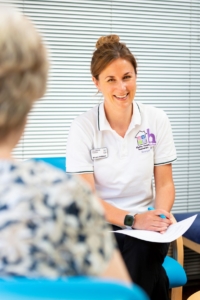 For the patients we provide care for at Blythe House and Helen’s Trust, Miriam’s role is vital in being able to give people the opportunity to build physical, social, environmental and psychological support; improving their meaning of life. This is through either 1:1 sessions at the Blythe House Community Hub, in a patient’s home – if that’s appropriate to them – or in a group setting.
Miriam, along with our expert nurses, and physiotherapist, host an eight-week fatigue, anxiety and breathlessness (F.A.B) programme, which aims to give our patients self-help strategies to support these symptoms, overall improving how they feel. These sessions run from 1:30pm-3:30pm on Tuesdays. Find out more.
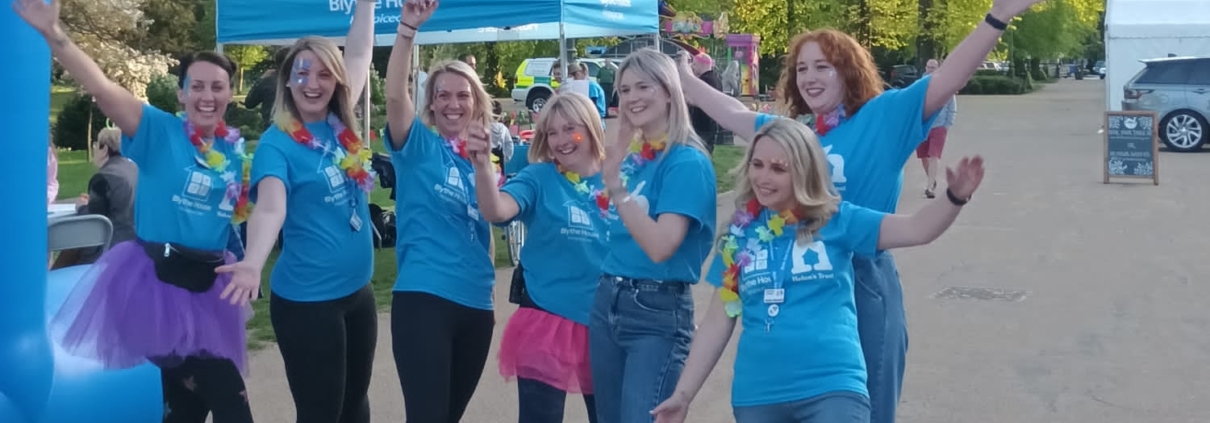
Becca Gregory came to Blythe House Hospicecare in May 2018 as the fundraising and events co-ordinator, working to establish and organise mass participation events that have become popular dates in the hospice’s calendar including the Jingle Bell Jog and Glow Twilight Walk.
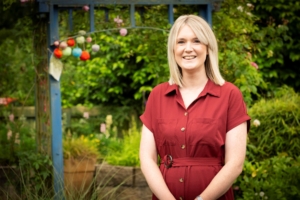 Becca – who holds a first-class honours degree in events management with tourism from Sheffield Hallam University – had previously worked in hospitality for seven years, organising weddings and corporate events.
Now, Becca, who lives in Buxton, is the fundraising manager at the hospice, and is responsible for overseeing the whole team including colleagues in events, community and corporate fundraising, as well as legacy and regular giving.
Becca explains: ‘I was familiar with the work of Blythe House as I live locally and knew of people that had benefitted from the services. I was made aware of the job vacancy back in 2018 by one of my Mum’s close friends who is a healthcare assistant in the Hospice at Home team. Having worked in the private sector for my whole career, the opportunity to work for a local charity that was so well regarded in my community, and with events management being a huge passion of mine, I was excited to apply.
‘I started in my current role as fundraising manager in October 2021. This role is very different to that of events fundraiser, but there are also a lot of transferable skills. All members of the fundraising team are very passionate about their individual roles and it is a pleasure working with them to grow the income for the charity. The fundraising streams are varied and the office is always busy; plus we have support from some wonderful volunteers which we are extremely grateful for.
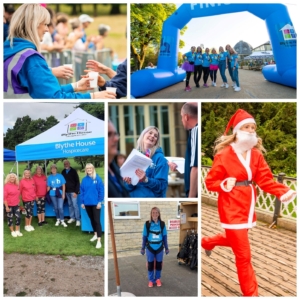
‘The hospice is a hugely rewarding place to work. Being able to see the difference that donations and fundraising makes to the support and care available to local people will always motivate and inspire me. Fundraising relies on support from both inside and outside of the organisation, and I feel very fortunate to be surrounded by fantastic colleagues, volunteers and donors who see the value of their support to the charity.
‘Every season is different in fundraising and there are so many events and campaigns that I love to be involved with throughout the year. I am very excited to see our community and corporate fundraising teams grow the Blythe House and Helen’s Trust Christmas Treecycle in January 2023; to help to continue to evolve our fundraising events, and to work with other hospice departments to highlight the value of in-memory and legacy giving to this local charity.
‘Outside of work, I have two young children who keep me very busy in my spare time. They love to hear about Blythe Bear and what they have been up to when out and about! I do also love keeping fit and enjoy starting my day with a 6am gym class.’

