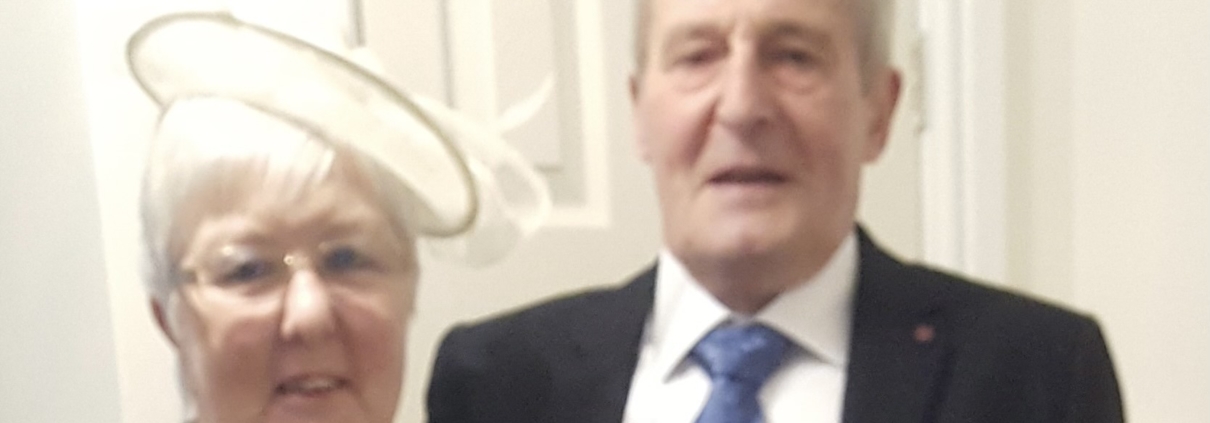
When Brenda Poulson worked at Blythe House for more than a decade, she never realised than nearly 10 years later, her own family would use the services here.

Brenda, from Whaley Bridge, said that when she came for her interview at the hospice, it was like a ‘huge hug’ whilst she waited in reception. She worked as a healthcare assistant in the hospice’s day services and offered complementary therapies including Indian head massage, reflexology and reiki, before she retired in 2013.

Later, the hospice supported Brenda’s husband of 50 years, Harry following his diagnosis with chronic obstructive pulmonary disease and emphysema, and offered counselling support to Brenda after Harry sadly died in October 2022.

Brenda explained: ‘Harry was poorly for a long time; he was referred to Dr Sarah Parnacott [consultant in palliative medicine at Chesterfield Royal Hospital, providing palliative care to patients across the High Peak and surrounding communities], and his breathing became progressively worse over the years before he required 24-hour oxygen.

‘Dr Parnacott knew me and my family, from my time working at the hospice. She always looked out for us and referred us to the Hospice at Home service to allow me some respite time to rest, or go out and meet a friend for a coffee.

‘When Harry died, I withdrew and just wanted to be on my own, with my memories. I didn’t want anyone to visit or to support me. One day, I saw Dr Parnacott when I was out, and she asked me how I was getting on. She said: “you know where we are if you need us.” My dear friend’s husband died three months before Harry, so I’d seen it all happen. Sometimes grief can take a while before it really hits home.
Harry

‘I went to the doctors and explained how I felt; they suggested anti-depressants, but I really didn’t want to take these. They offered to refer me to counselling at the hospice and I met Lisa, my counsellor. She was brilliant. To be on the receiving side was to experience the special feelings that come with being in a supportive environment.

‘When something like this happens, I don’t think you understand the grieving process and what happens; you don’t think normal things. Lisa explained the process of grief and bereavement; she really understood me, and there were only two occasions when I didn’t cry, but I felt so at ease with Lisa.

‘I was anxious and stressed out; I had upcoming knee replacement surgery in the back of my mind as well as processing the grief of Harry’s death, and Lisa talked me through relaxation techniques.

‘Lisa encouraged me to be brave and do things on my own; I have slowly started to take her advice and have been out for a coffee and for lunch on my own. I’ve also met friends, and started to go away on holidays with my friend whose husband died. I always came away from my counselling sessions with ideas and was able to start enjoying my hobby of arts and crafts again.

‘The feeling that you can relax and have no fear of opening up your inner most thoughts, because you know you are in a safe, caring place with someone who cares and can see that you are hurting inside, makes so much difference.

‘The whole package helped so much; everyone says I look so much better; brighter. I hate to think where I’d be without counselling from the hospice. I don’t think I would’ve got over Harry’s death as well as I have done. I needed someone to spell it out and explain that I wasn’t odd because I felt this way, or that way. I am so grateful to have been able to access this support. I still cry sometimes but that’s how it will be, but now I can understand and deal with it on my own thanks to Lisa.’

Find out more about our counselling and bereavement service.
Share your hospice story.

Jessica Wood began working as fundraising assistant at the hospice in April 2016, bringing transferrable skills from her previous job as a college lecturer.

In 2020, Jessica made a change and began working in the hospice’s finance department, whilst studying towards AAT Foundation courses in accounting at Buxton and Leek College.
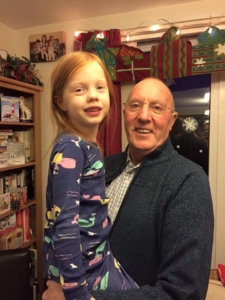
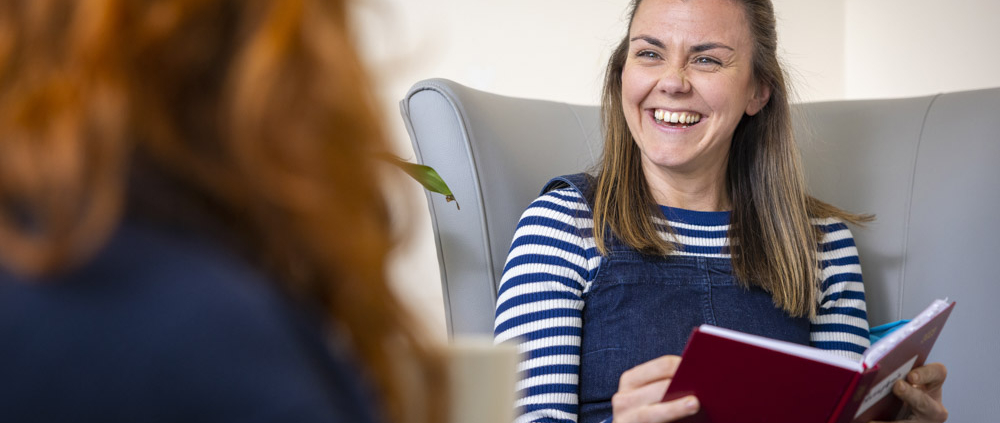
Jessica, who lives in Glossop, explained: ‘I loved teaching but fell out of love with the education system and how it operated, so I decided to start looking for a new job and a career change. I had lots of transferable skills which I thought I could bring to the fundraising team here at the hospice, and I wanted to do something that I felt made a difference, and had an impact.

‘I supported the fundraising team for several years as an assistant, undertaking roles including liaising with local supporters who were raising money for the hospice; celebrating success with cheque presentations; hosting events and stalls; and organising seasonal initiatives including Easter and Christmas knitting.

‘I started supporting Karen, the finance manager, one day per week due to an increase in her workload, and I realised I really enjoyed the tasks she was asking me to do. I looked at the possibility of undertaking some training and spoke to the HR manager who encouraged me that it was something the hospice could support me with.

‘The chance to undertake the accounting courses at night-school was an amazing boost to me personally and gave me confidence that the hospice supported me and my personal goals for development in my career.

‘The initial career change for me was the scariest thing I’ve ever done but it honestly turned out to be the best. Nearly eight years later, I am enjoying my job more than ever and feel really settled in a job I absolutely love! My tasks including payroll, reconciliation of shops takings, processing invoices, organising quotes, reconciliation of all income and expenditure, budgeting, monthly meetings with heads of departments to ensure thrifty spending and continuous income, and producing reports for the board of trustees.

‘I love the culture and feeling here at the hospice; everyone chips in to support each other. One minute I am doing payroll, and the next you’re helping the fundraising team at a Christmas wreath making event. It really does feel like everyone has the best interests of the charity at heart. I really enjoy events like the volunteers’ social summer BBQ where we as staff get to really appreciate the people who help us, by chatting to them and finding out more about them and why they support us.

‘The best part of my role is knowing that money is spent wisely and that the CEO, board of trustees and us in the finance team ensure that we are making the most out of everyone’s donations. I also thrive working with such amazing, inspirational people who genuinely want to ensure we are providing the best care for our community.

‘Outside of work, I love spending time with my family and anything to do with food – cooking it and eating it! I also enjoy running, and run alongside several friends from work. We recently took part in the Manchester Half Marathon, raising over £1,500 for the hospice; and I have undertaken the Chatsworth 10k in the past!’

Read more stories from our staff.

Laura from Buxton is taking part in our Jingle Bell Jog on Sunday 3rd December in memory of her beloved Poppop, and dear friend, Lynne.

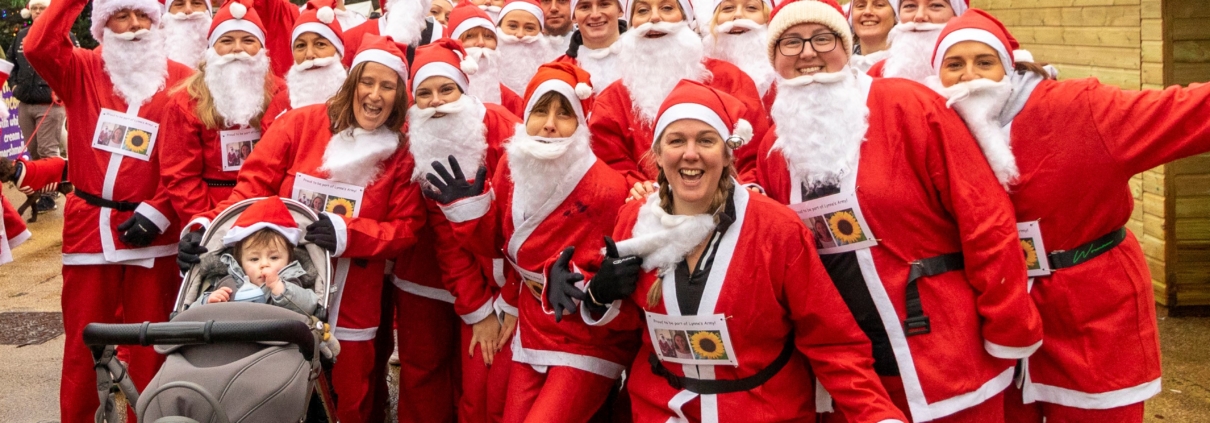
Laura explains: ‘I first took part in 2018; I missed taking part in 2019 but came along to the event to cheer on Lovely Lynne who did it with friends and family. I haven’t missed a year since and it was really wonderful to take part alongside my daughter in 2022. Last year was the second year running that a group of us came together to form what we’ve called “Lynne’s Army.”

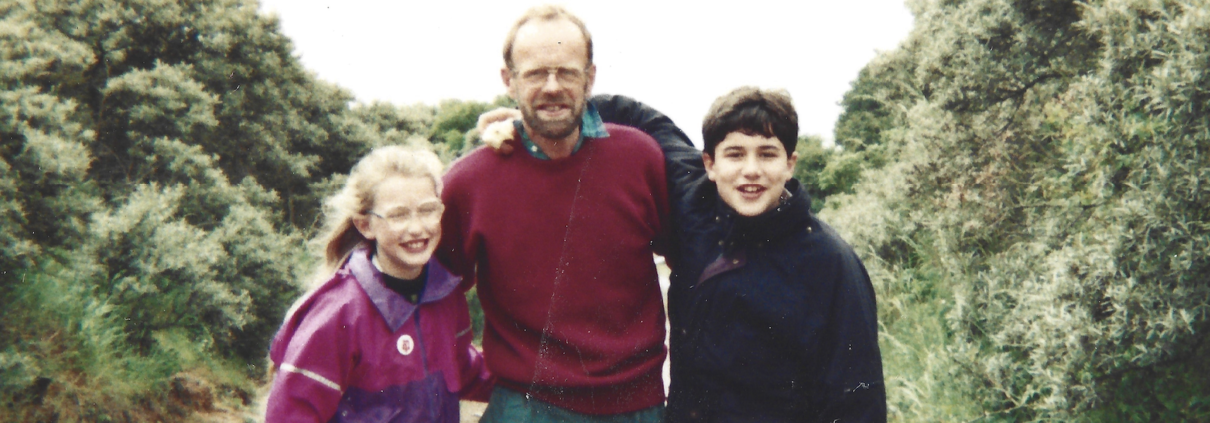
‘When I first took part in 2018 it was in memory of my Poppop – David Vaines. He sadly passed away in 2017 after battling with Leukaemia for a number of years. We found out in October 2017 that there was nothing more that could be done for him and he came home from hospital to spend the remainder of his time with family. It was thanks to the Hospice at Home team from Blythe House that Poppop was able to remain at home during his final days. This meant so much to our family as it really eased some of the stresses that would have been if we’d had to travel to hospital to visit him. The team that supported Poppop enabled him to die with dignity and that is something that we will forever be grateful for. The support offered extended beyond this and they weren’t just there for him but also all of us.
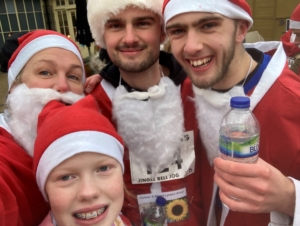
‘In 2019, Lovely Lynne took part in the Jingle Bell Jog, after her own battles with cancer she always did whatever she could to support Blythe House with a number of different fundraising projects. It brought tears to our eyes as we watched her son Alex cross the finish line and run back to find his mum and complete the race again by her side. In 2021, Lynne’s Army was formed by her family and close friend, Alice, and unsurprisingly there were lots of people keen to join the team in support of Lynne.

‘On the day Lynne passed away she was messaging me about the Just Giving page that they were setting up in advance of the Jingle Bell Jog; I still have our messages and she said “Alex and Alice are thinking we call it Lynne’s Army?!!? What do you think?! I feel like I’ve got an army behind me for sure.”

‘Lynne didn’t get to see us all rally together that year but we bossed it for her and we did that again in 2022 and that’s exactly what we are going to do again this year. Each year I’ve made some signs for us to wear featuring Lynne’s beautiful face and a sunflower; she loved sunflowers and they definitely remind us of her and the sunshiny positive outlook she had on life.

‘I think it’s impossible to find a reason why you wouldn’t want to support the hospice. The experience we had personally for our Poppop will never leave us and I would do anything to help raise money so other people can continue to receive such amazing care and support at what can only be described as the worst time in life. I know that Lynne’s family benefited from other support that Blythe House has to offer such as counselling services so we will continue to come together year on year and always do anything we can to raise money.

‘It’s hard to say what my favourite thing about taking part in the jog is…I think seeing so many Santa’s in one place has to be a highlight. I remember in 2020 when the jog was ‘reimagined’ because of Covid-19, we created our own route and we were running up St John’s Road and people were driving past tooting their car horns in response, and I remember actually having a little cry as a ran along because this meant so much. I think whilst I initially started my Jingle Bell Jog journey in memory of Poppop, it now carries a very different meaning and I’m really looking forward to Lynne’s Army coming together for the 3rd consecutive year. It’s nice to be around so many people who loved Lynne as much as we did and to share our fond memories of her together. She was a truly incredible person; a lovely wife, mum, sister and sister in law, friend, colleague…the list could just go on. So, I guess my favourite part of the jog now is celebrating our lovely bunch of loveliness – we’ve said this a few times over the last few years but we genuinely were better people for knowing and loving Lynne.
‘I will always champion any fundraising events that will benefit Blythe House and would encourage everyone to take part. You don’t have to be able to run – walking a 5k is absolutely doable so the event is inclusive and anyone can take part – there is even a shorter route for children under the age of 12. The route is wheelchair and pushchair friendly too and believe me there is no better feeling than crossing that finish line!’

Register to take part in the Jingle Bell Jog.

Would you be happy to share a few words and a photograph about why you’re taking part in this year’s Jingle Bell Jog? Perhaps you’re taking part to support the hospice as a family member or friend is being cared for by by the team here; maybe you’re doing it as a fitness challenge; you’re getting together with loved ones to kick start the Christmas festivities; or you’re doing it in memory of someone special. Whatever your reason, we’d love to hear from you! Please contact our communications team Rebecca and Poppie.

Blythe House supported Ben’s dad, Cheslie to die at home in Chapel-en-le-Frith just a matter of months after he was tragically diagnosed with oesophageal cancer in March 2023.

Support our 2023 winter appeal.

Ches with Ben, and daughter, Claudia

Cheslie, or Ches as he was known, had only moved to the town in January to be closer to his son and daughter, Ben and Claudia, after living in Wales for over two decades. Soon after, he developed a cough which got worse and worse; and he ended up in hospital with aspiration pneumonia. Only a few weeks later, Ches received his diagnosis and was told that treatment was not a realistic option.

Ben, who also lives in Chapel-en-le-Frith, explained: ‘Given my Dad has never been the healthiest of individuals, we always knew that he was here for a good time and not a long time. As a result, we already had our heads some way around his mortality. It was, however, still quite overwhelming for all of us to hear the diagnosis.

‘The pressure of wanting to make this the best end possible was what weighed really heavily on us. We saw being able to be by his side as a huge privilege; but we had no idea of what we were facing, what help there was or what we could reasonably expect or achieve. The unknown was scary.

‘Dad’s specialist at hospital referred us to Blythe House. In a strange turn of events, I had only heard about Blythe House and Helen’s Trust through a lady I was supporting during the Covid-19 pandemic. I was doing her shopping for her whilst she was isolating, and one particular week, she asked me to pick up a copy of the Buxton Advertiser as her niece, Vicci was on the front cover [Vicci, who has now retired, was our community volunteer manager at the hospice].

‘So, when Louise Furmston [community engagement lead nurse] called me and asked if we wanted to have a chat, the answer was a resounding “hell, yes please!” Since my first meeting with Louise, the team at Blythe House have been nothing short of outstanding. I will never be able to put into words exactly the gratitude Dad, my family and myself feel towards the staff at Blythe House – but it is immense.

Ches’ last trip to Angelsey

‘When you’re thrust into this unknown and quite frankly, scary place the NHS can feel like a huge juggernaut of people calling you and offering things. I had no idea who people were or what they did, and felt the pressure of not wanting to make a mistake. Louise took the time to go through who everyone was; explaining how they would help us and what their job role was. That practical guidance was invaluable and helped us feel more in control.

‘As well as Louise’s support, she referred Dad to Miriam and Angela, the hospice’s occupational therapy and physiotherapy team. They came out to visit us at home, and I’d say “I don’t know what we need, but we’re struggling with this…” and a piece of equipment would turn up shortly afterwards to help us manage. There were things we didn’t even realise we needed, but were actually brilliant.

‘The support my sister and I got as his main carers was also incredible. Again, it wasn’t just the vast knowledge and expertise that everyone has, but it was the practical “human” stuff that makes the real difference. When we took Dad away to Angelsey for a few days when he got out of hospital, which was one of his dying wishes, having someone say “don’t waste his energy on a shower – just enjoy it” is the best guidance. That advice enabled us to squeeze out every ounce of enjoyment we could, while we could.

‘We also enjoyed a day out at Peak Wildlife Park as Dad wanted to see red squirrels for the last time; and I took him for a pint to celebrate the King’s Coronation, literally a week before he died. These things happened because knowing Blythe House were on the end of the phone empowered us. It gave us the confidence and the freedom to know we could make Dad’s last few weeks memorable; and if things went pear-shaped, they had our backs.

A final pint

‘The Hospice at Home team were also involved; providing day and night-time sits so that Claudia and I had the capacity to keep popping our head up above the parapet of Dad’s bubble, so that we could rest and spend time with our families.

‘Everybody really went above and beyond to ensure that Dad could die at home, as he wished, with real dignity. When things went wrong, and they do, everyone around you seems to give you different advice about what to do. A chat with Blythe House helped us to make sense of what was going on and empowered us to make our own informed decisions about Dad’s care. As a result, he could stay safely at home and we had the confidence to keep doing what we were doing.

‘What we think makes everyone at Blythe House so special, is that everyone we met genuinely cared and made this a very human experience. We looked forward to their visits. We had fond nicknames for many of the team members, for the advice, support, humour, care and anecdotal tales that they brought to our lives, including WikiPenia for Penny [Ellis, Hospice at Home deputy manager], Hey Jude [Webster, Hospice at Home manager], Danihesive for Danie [Gartside, Hospice at Home administrator] and not forgetting the healthcare assistants including Deck Chair Mary and Las Vegas Helen!

‘Each member of the Hospice at Home team brought energy, humour and life into Dad’s flat with them – and that energy stayed long after the visit had finished. The personal care and stuff is essential, particularly at the start when we were floundering, but we grew to realise that the humanity, humility and personality was what we valued most.

With granddaughters, Elodie and Evalyn

‘It was very apt that as Dad died, he had myself and my sister holding his hands while someone from Blythe House was holding our hands through it.

‘Dad was a huge part of our lives, and I do not want to underplay how hard this has been. Cancer plays with your head and then punches you in heart, and Dad faced a very tough time with bravery, dignity and humour. He was immense.

‘One of the last conversations I had with Dad though was that Blythe House made death not just bearable, but memorable. In the face of huge sadness, Blythe House reminds you that there are amazing people in this world – and the compassion, humour and support you have all shown has had a profound impact.’

Can you support your local hospice as we prepare for our busiest winter on record? Find out more.

Brian, Edana’s partner of 30 years, was referred to Blythe House following his diagnosis in autumn 2021, with bowel, liver and lung cancer. A typically private and reserved man, Edana says she knew something was not right when Brian put off doing little jobs around the house – something he otherwise loved to do.

Then, one morning whilst having a hot drink in bed, Edana was totally stunned when she asked if Brian was OK, and he responded with ‘no, I don’t think I am.’

Edana, who lives in Hayfield, explained: ‘After we called the GP in August 2021, it all moved very quickly. Brian underwent numerous investigations including tests, MRI and CT scans at Stepping Hill Hospital, before he was told he had a tumour in his bowel, and that the cancer had spread to his liver and lungs. From there, he was referred to The Christie Hospital where he underwent a week of radiotherapy treatment followed by chemotherapy.

‘Brian was a very private person, and apart from the treatment to target the cancer, he refused all other help and support from medical professionals. He’d say “no, we’re OK; we can manage; we’re fine.” I of course respected his wishes.

‘After three months of chemotherapy treatment, Brian was told that it had not helped, so he was offered a different course of chemotherapy but unfortunately this did not work either. His doctor advised that there was no point going through more gruelling treatment if it was not working, so he prescribed chemotherapy tablets, but was very honest in saying he didn’t think they were going to do much.

‘Towards the end of June 2022, Brian became very poorly and I worried he had picked up an infection. I offered to call the doctor but Brian said no. In the end, I did have to ring because I was so worried about him. The doctor came and saw Brian, and said that if he didn’t go to hospital as soon as possible, he wouldn’t see the weekend! Brian was diagnosed with sepsis and pneumonia. Two weeks later, he came home but he was incredibly exhausted.

‘Following his stay in hospital, the nurse from our GP surgery came around to discuss different things, including completing a ReSPECT form, which would outline Brian’s preferences for care if and when he might not have been able to make decisions later.

‘After this, we first received a call from Blythe House and the kind woman on the phone chatted through all the care and support that the hospice offered. Again, Brian was adamant he didn’t need any extra help and so we politely declined, but at that point I felt so much better that contact had been made. Up until then I felt alone and that all Brian’s medical care and treatment was on my shoulders, but I felt so much better knowing that the hospice was there, and could help if we needed it.

‘Miriam and Angela from the hospice’s occupational therapy and physiotherapy team did call as a result of Brian being referred through the NHS occupational therapy service. They came to the house and arranged for a rail to be fitted in our bathroom so that Brian could still safely have a shower, as it involved climbing into the bath.

‘On the 20th September, Brian had an appointment at Arden House in New Mills to have his bloods taken, but he wasn’t fit to go; he could hardly walk, but he was adamant he wanted to be there. The nurse took one look at him and couldn’t believe he had made it into the surgery. They couldn’t take his bloods, but arranged for a doctor to visit us at home. There were several more unsuccessful attempts to retrieve a blood sample until our local district nurses were able to.

‘Tina Wild, advanced nurse practitioner at Sett Valley Medical Centre in New Mills, came to visit us to talk through everything. She referred Brian to the district nurses and asked them to order a hospital bed; they started to come around to care for Brian. Tina also put us back in touch with Blythe House; Louise Furmston, Community Engagement Lead Nurse, called us. Brian said, “we’re alright, we don’t need any support,” but I wasn’t; I could feel that I was draining trying to care for Brian on my own. Caring for someone you love who’s going through something so awful, it really is draining.

‘Louise referred us to the Hospice at Home service, so healthcare assistants (HCAs) started to come for an hour per day to give me time to have a rest, sit in the garden or go on a walk. The relief was overwhelming; I felt like I’d got back-up. It felt very strange at first; allowing strangers into our home, but over time it was like opening the door to a friend. Every single HCA was so lovely; they asked how I was and cared for me, as well as Brian.

‘In the room we’d moved Brian’s bed into, there was shelving displaying Brian’s Play Mobil train sets. The trains were a real conversation starter with the HCAs, as I could hear each one chatting and asking about them; this really helped Brian to open up to them and I could tell the difference in his voice; speaking to different people other than me, was doing him the world of good.

‘In October 2022 during one of her visits, Julie, one of the HCAs, recognised how poorly Brian was and asked how I was coping. She spoke to the office team and asked for visits to be stepped up, which they were to two hours per day, and some overnight sits too. It was so wonderful that the team was able to do this so quickly. I wasn’t so sure about the night visits at first, but the team reassured me and said “just give it a go.” Straight away, on the first visit, I felt at ease. I went to bed and was able to sleep soundly. I heard Brian cry out in the night but I knew Gary was there and I felt comforted. I had a really good sleep, and in the morning, I felt so well rested. It hit home then that I’d been doing this all day, and all night for so long.

‘On Monday 7th November, Brian was becoming very distressed and he was obviously frightened. I called the district nurse who came to check the medication in his syringe driver. I didn’t know if I was panicking but I knew I’d made the right decision. The district nurse kindly told me that Brian was really, very poorly.

‘Gary was with us overnight again and he was so good and caring. He told me to go and get in bed, and to have a rest. Gary woke me up at 4am to tell me that Brian’s breathing had changed, and so I was able to be with him at the end. I can’t speak highly enough of Gary’s care and support afterwards. He stayed with me and made a cup of tea whilst I sat with Brian. He kept checking to see if I was OK or if there was anything I’d like him to do.

‘Since Brian’s death I have accessed counselling and bereavement support at the hospice which I found very, very helpful.

‘All through Brian’s illness he didn’t want anyone to know, and he didn’t want any extra care and support. I of course respected his wishes as much as I could but my only regret is that I wish we’d had support from the hospice earlier. Everyone we met was fabulous; so kind, supportive and caring. Thank you doesn’t come close; I have no words for how grateful I am.’

Find out more about hospice services and how we could support you or your loved one.

Teacher, Kelly accessed counselling and support at Blythe House in spring 2023 after her diagnosis with breast cancer in January.

The mum-of-two from New Mills explained: ‘I was getting in the shower back in November 2022 when I put my arm up and spotted a little lump next to my breast; near where my breast met my armpit. I had a feel but I wasn’t too worried; I just thought it was a raised gland, but there wasn’t one on the other side. I mentioned it to my husband and decided to go and get it checked out.
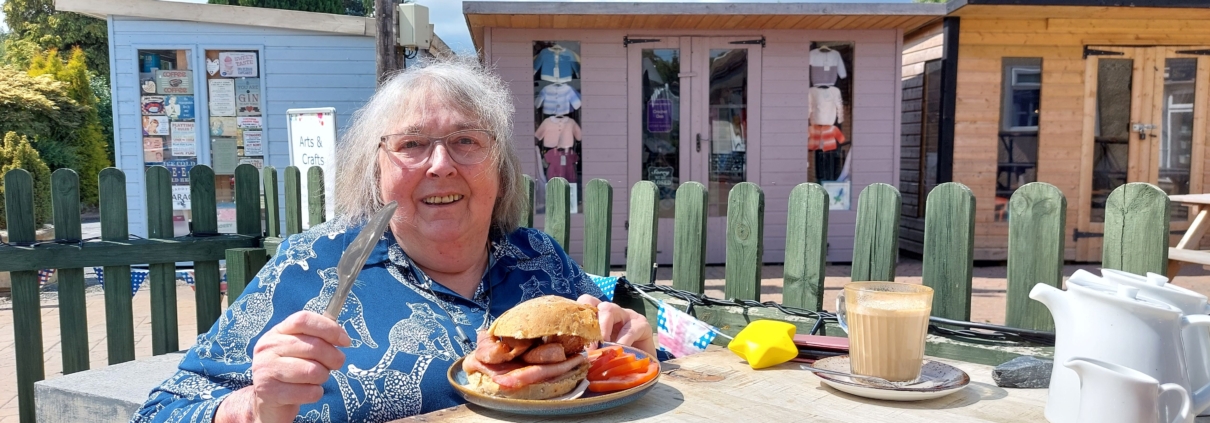
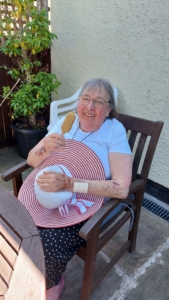
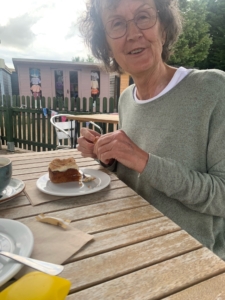
‘My GP checked me over and made an urgent referral to Macclesfield Hospital. Within two weeks, I underwent scans, mammograms and three biopsies. We had a horrendous wait over Christmas to find out the results, and I was told I had HER2+* breast cancer in January.

‘I started with six rounds of chemotherapy but also had drugs administered to targeted the HER2+ specifically. Then I underwent surgery to have a mastectomy, and following that, I had radiotherapy.

‘I met a friend and former colleague for a catch up who’d retired from my school. She’d had breast cancer previously and she asked me if I’d been in touch with Blythe House. I queried her question; I thought hospices were places that people go to die. She told me absolutely not; that the hospice provided so many different services, and levels of support.

‘I got in touch with the hospice and came in with my husband to chat through all our worries and concerns. I attended information and support sessions, and the Breast Friends breast cancer support group, which were really helpful to learn from and chat to the hospice team, and meet likeminded people.

‘I also referred myself to the counselling service where I had seven sessions with Kate. The thing with being a mum is that I wanted to shield my family from what I was actually feeling. My son is 15 and my daughter is 11, and my husband was of course very worried too. I can only imagine what it’s like to watch people that you love go through something so horrendous, and the fear you must feel, so I tried to stay positive and cheerful all the time.

‘Counselling was a chance for me to say how I really felt, and talk through how bad it was. It was really useful for me to have somebody who I could talk to, and be completely honest with. I did not have to worry about upsetting anyone or hurting anyone’s feelings.
‘I am in a good place now; my prognosis is very good and there’s a relatively low chance of my cancer coming back.

‘The support from the hospice has been absolutely brilliant, and the fact that it’s somewhere local too. For a lot of cancer services, you have to travel into Manchester, Stockport or Macclesfield, so it’s really handy to have something on our door step here in the High Peak.

‘When you’re first diagnosed with cancer, you feel so isolated. Despite the adverts that we all see, about one in two of us being diagnosed in a lifetime, I didn’t know anyone that I was really close to, and there was no one in my family. I felt totally on my own and plunged into a whole new world; one that I did not want to be a part of, but I had no choice. The hospice gave me the opportunity to be with people in similar situations, who understand a little more about this world. The hospice made me feel a little bit less scared and worried.’

Find out more about our counselling support service.

* High levels of HER2+ are found in some types of breast, oesophageal and stomach cancer, which helps the cancer cells grow and survive.

Christine was referred to Blythe House in spring 2021 by her GP at Thornbrook Surgery in Chapel-en-le-Frith after tests revealed that she had cancerous tumours on her lungs and brain.

Christine’s beloved younger son, Simon, tragically died on 31st January 2021 after he was diagnosed with cancer, aged just 35 years old. After this, Christine became unwell and doctors thought she may have had a stroke, but examinations at hospital and an MRI scan found that she’d had seizures as a result of the tumours.

Christine

Christine, who lives in Chapel-en-le-Frith, explained: ‘Dr Newbury referred me to the hospice for advice and support following my diagnosis. I underwent chemotherapy and radiotherapy at The Christie Hospital.

‘I carried on having seizures and I just didn’t feel safe. I fell over and broke bones, including my ribs and sternum. I also damaged the bottom of my spine. I was very nervous. Angela and Miriam, the hospice’s physiotherapy and occupational therapy team, have been so very helpful. They suggested a new walker to help me with getting about better, and this has massively improved my confidence and my independence.

‘I attended a makeup session at the hospice aimed at boosting confidence and teaching skills to apply makeup. I loved it so much and felt really good afterwards. After the session, I wore make up for my next hospital appointment; I hadn’t worn it since I had been diagnosed. If you look good, you feel good, and although I don’t feel like me anymore, I try to maintain a positive mental attitude and keep going; this really helps me to cope with my illness.

‘I received support from George Downs, a welfare benefits officer who provided financial support and advice, which was just so beneficial to me. When you’re ill, your brain doesn’t work properly, so going through realms of paperwork with George’s support so was helpful.

‘Healthcare assistants (HCAs) from the Hospice at Home team come to visit me three times per week for personal care, including having a shower. My medication and steroids have made me gain four stone in weight and I am quite embarrassed and self-conscious but the HCAs put me at ease and make me feel so relaxed and comfortable. Philippa has been round just this morning and painted my toe nails!’

Pat

Pat Kirk, a hospice community volunteer, has supported Christine since October 2021.

Pat, who’s from Buxworth, explained: ‘When I first started helping Christine, there were still Covid-19 restrictions in place so we spent a lot of time outdoors. I weeded the driveway, and did some gardening. Then as Christine got to know me better, we started going to the local cafes and shops. At first, Christine was able to walk the short distance locally, but I have also taken her out in the wheelchair. I have done the occasional household chore; we’ve done some baking, and I have taken her to appointments.

‘Over the last few months, as Christine has become less steady on her feet, we started going out for drives in the car, or we might go to garden centres or teashops for coffee and a slice of cake. We’ve also been to buy fresh farm eggs or picked up an ice cream from the Hope Valley!

‘Christine is a very lovely and positive lady, despite all the stresses she has to endure. I enjoy visiting her as I can really see the difference it makes. Supporting Christine has made me so much more aware of what it’s like for people who can’t leave their house on their own. Whenever we’ve been out and about in Chapel-en-le-Frith, she’s met people she’s not seen for a long time, and it’s good to see her chatting with people she’s met by chance. That’s just the sort of interaction the rest of us take for granted.’

Christine added: ‘Pat and I get on so well. We have a nice time and really enjoy each other’s company. Pat has helped me to maintain my independence and keep me mobile by supporting me with little exercises and picking up advice from Angela and Miriam about getting in and out of the house and car safely. Other volunteers have also supported me by taking me to hospital appointments when my family have been unavailable due to work commitments.

‘It has been lovely to get out of the house; in the car or on foot. It feels like I’m on holiday and it takes my mind off everyday things. The times with Pat just bring a bit of normality, and they make me feel like I’m not ill. After being locked in during Covid, it was horrific, but getting out allows me to see and meet people I haven’t seen for so long and have a catch up. We sometimes also go to the cemetery to visit Simon, and my husband, Steve, who died 26 years ago.

‘I had never accessed hospice services before but had always supported the charity. We asked for my donations at both my Mum and Dad’s funerals to come to the hospice; I wanted the money to go to a local charity and be for the community. I have also given lots of my old clothes which no longer fit to the hospice charity shop in the town.

‘The conversations I have with people at the hospice help me to go somewhere else. When you’re ill, you don’t want to talk about illness all the time, and the team don’t do this. They make me laugh and make me forget about my diagnosis.

‘I don’t know what I would’ve done without the hospice; all the team are like family and I am surrounded by good people. You can tell they’re doing their job because they want to, not because they have to. Everyone is so helpful, kind and caring. Without them, I would be stuck indoors on my own. Their visits have increased my quality of life, and helped me to continue living my life despite my illness. I will be forever grateful to everyone.’

Find out more about Blythe House services.

Learn more about the Community Volunteer programme or apply to become a volunteer.

Blythe House Hospice is gearing up to celebrate its 35th anniversary in 2024.

The hospice came from humble beginnings, from its first location at 137 Manchester Road in Chapel-en-le-Frith (a residential home next door to Whitestones Care Home), to the purpose-built building on Eccles Fold where it stands today.

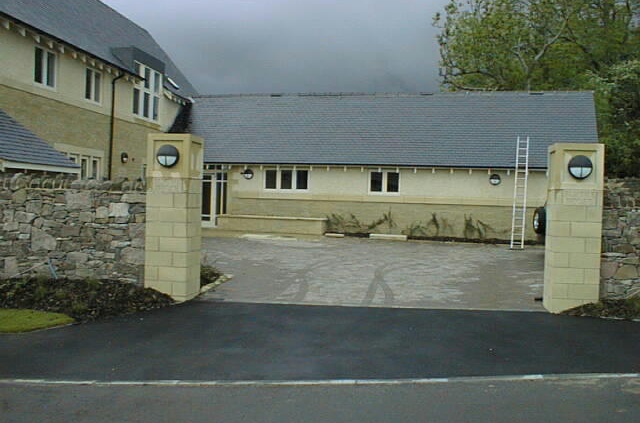
Work on the facility we know today began back in 1998 on the site of a former workhouse.

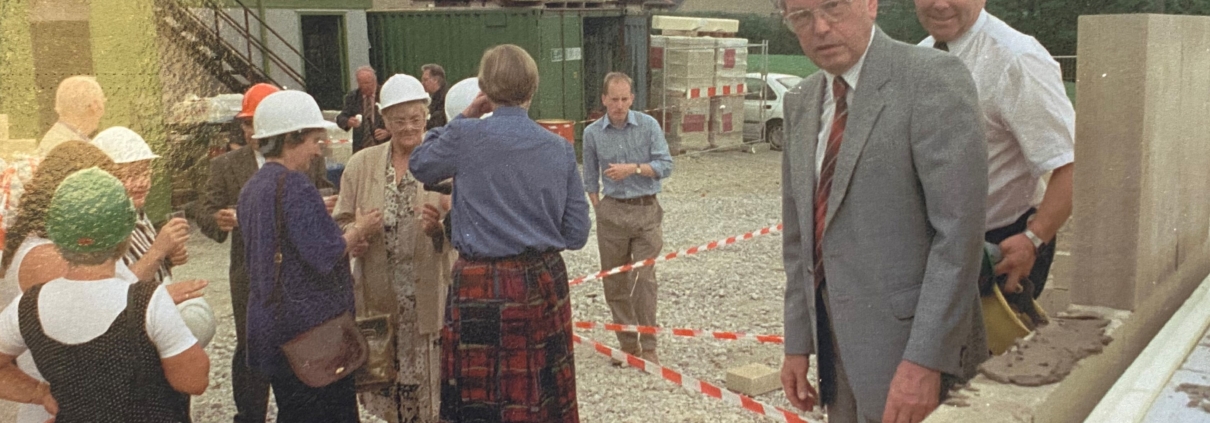
Trevor Gilman, an experienced project manager and keen historian from Buxton, was employed by the hospice’s board of trustees to keep them informed about the building’s development.

Trevor had spent the 1960s studying engineering and the 1970s studying building construction, culminating in a decision in 1978 to open his own design practice offering a design and management service in both disciplines.

His first major project was for a complete factory for the Dutch Maid Company who had outgrown their premises in Tideswell and acquired land for a new building at Fairfield.

Through this work, Trevor met Ann Gutteridge a Buxton solicitor (a close friend of hospice founder, Reverend Betty Packham), and this was how he came to be involved in the hospice build project.

Trevor explained: ‘It was my job to look after the trustees’ interests, and keep them informed about what was going on, on site. I worked closely with David Close (former volunteer chief executive of the hospice), and would liaise closely with the architect, David Darbyshire in Newcastle, building inspectors and structural engineers.

‘I made sure that everything was going to plan and nothing was in the wrong place; I’d flag up problems and look after the interests of everyone involved. I’d report back to the architect and trustees on a weekly basis to keep them up to date on progress.

‘It was an exciting project – one of the most interesting in a long and varied career. As a result, I still support Blythe House when I can, through the charity shops and making donations from time to time.’

This carousel of photos was taken by Trevor throughout the construction of the hospice building.

If you have any memories or photographs of the hospice throughout the years, we’d be delighted to hear from you. Please email: communications@blythehouse.co.uk.


As time goes by so quickly and people move on, it is so important to keep a track of history so that stories and memories from years gone by can be preserved for the interest and enjoyment of others well into the future.

Blythe House is gearing up to commemorate its 35th anniversary in 2024, and as part of celebrations, we are keen to hear from anyone who has fond recollections of it over the years.

The hospice was founded in 1989 by Reverend Betty Packham, after she was bequeathed a £1,000 legacy in the will of Stan Blythe. Betty, and her life companion, Doris Turck cared for Stan in the comfort of their home during the last four months of his life.

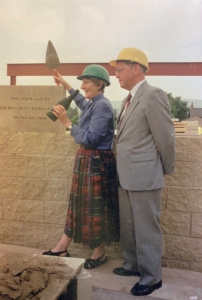
David with Betty during hospice construction

We were delighted to welcome Jan Close, wife of David Close OBE, and their eldest daughter, Kate Paine, to the hospice recently, to talk about its earlier history.

David masterminded and project managed the build of the purpose-built hospice facility on Eccles Fold, Chapel-en-le-Frith where Blythe House is still based to this day.

Jan said: ‘David was due to retire from his career in the engineering industry in 1992. He met with Simon Cocksedge, who was then his doctor, and chairman of the committee for the hospice at this point. David told Simon that he was retiring, and he’d be keen to get involved in volunteering to support the hospice. Within 24 hours, Simon approached David and asked him to be chairman of the committee!’

At the time, the hospice was still very small; operating from 137 Manchester Road, a home in Chapel-en-le-Frith that Derbyshire County Council very generously let the committee have rent-free. In January 1995, a plot of land at Eccles Fold was purchased from Derbyshire County Council to build a brand-new hospice.

In February 1997, David hosted a launch event at the Town Hall for an appeal to raise £500,000 for the hospice build; backed by the hospice’s patron at the time, the Duke of Devonshire. David and Jan spent two years ardently seeking grants from trust funds until they reached that total. The remaining £200,000 was raised locally by fundraiser, David Mirtle, and local volunteers.

Jan explained that along with the hospice committee, he managed costings and payments, also health and safety. He liaised with the architects, held site meetings with builders and electricians about proposed plans, and the design and layout of the building.

The building work was completed in June 2000, and the month after saw the last day of hospice services at 137 Manchester Road. In August, the brand-new hospice on Eccles Fold opened its doors to patients for the first time, and it was officially opened in September with a special event attended by local dignitaries. In March 2001, the Duke of Westminster visited Blythe House to celebrate its opening.

David retired from his voluntary position as chief executive in March 2003, passing on the role to Nick Pilling.

If you have any memories or photographs of the humble beginnings of the hospice, to what it is today, we’d be delighted to hear from you. Please email: communications@blythehouse.co.uk.

‘It is a pleasure to be a part of the great work the hospice does and to help in raising much needed funds which support people in our community.’

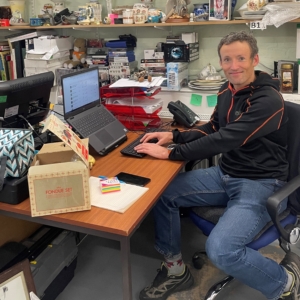
Gavin Peach joined the hospice family as ecommerce manager in May 2021; overseeing our digital sales to raise vital hospice funds including eBay site and online store.

Gavin, who lives in Tunstead Milton, says he was drawn to the opportunity to work for a charitable cause that helped people in the local community.

He explains: ‘It is extremely satisfying to list items which have gone on to sell for a surprising amount. For example, a damaged, frameless canvas turned out to be an original by aboriginal artist Maurice Namatjira (1938-77) and sold for £225.

‘It is great working with staff and volunteers at our online sales unit in Bridgemont near Whaley Bridge; the team has been invaluable in helping to improve sales and to progress ecommerce for the charity. We have formed a brilliant team.

‘It is very rewarding to see examples of the care that is given to people in the local community, and to reflect on the direct correlation between the money we generate and the care provided.

‘During the remainder of 2023 and beyond, we hope to continue to grow and develop the ecommerce sales for the hospice. In a world where technology is constantly developing and habits are forever evolving, I believe that the opportunity for growth in online sales is huge.’

Prior to his role at the hospice, Gavin worked at Ferodo in Chapel-en-le-Frith for many years across roles including quality engineer, process improvement engineer, and in customer service.

He explained: ‘I also have experience teaching English at Key Stage 3 and GCSE level; Media Studies at A Level, and English as a foreign language in Japan. I have a Master’s Degree in Screen Arts, which I achieved a distinction in, and a postgraduate certificate in education in English and Media Studies. I have also been involved in the past in several independent fiction and documentary film projects.’

Outside of work, Gavin has a plethora of interests which keep him busy. He says: ‘I take great pleasure in enjoying what the countryside has to offer as I’m a keen outdoor enthusiast.

‘In recent times, my focus has been on running and I have been lucky to participate in long distance events such as Ultra Trail Snowdonia 100 mile; Ultra Trail Mont Blanc 170km; and the West Highland Way Challenge Race 150km. This year, I also entered my second ever marathon and was very happy to achieve a sub three-hour time.

‘In 2021, I raised £1,260 for the hospice by competing in the Ultra Trail Snowdonia 100km, and plan to do further fundraising in the future. Later this summer, I will participate in the L’Echappee Belle Integrale 149km in the Belledonne Alps, which will be a tough technical mountain race with complex terrain and over 11,500 metres of ascent and descent.

‘I am a keen climber and have experience of climbing in spectacular places such as Yosemite Valley, the Alps, and up frozen Norwegian waterfalls.

‘Finally, I have weekly Japanese and Spanish lessons, and in July I will take the Japanese Language Proficiency Test N3 Level. All in all, I have a busy active schedule.’

Support the hospice by shopping online.